TRIPLE LUTZ
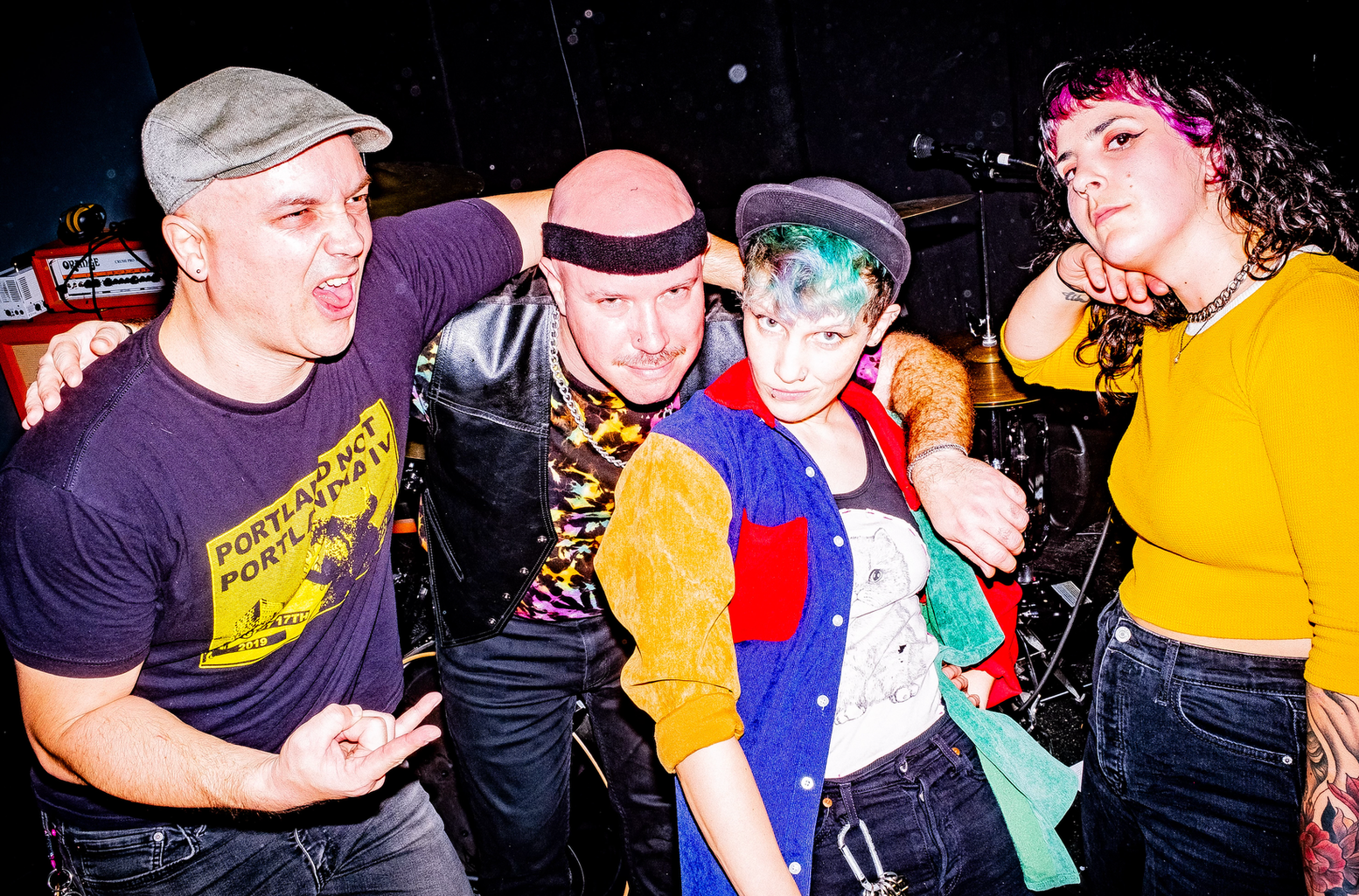
PHOTO CREDIT: KC JONZE (@thelonius_punk)
1. Thanks for this interview! Would you please introduce yourself and what you do in the band?
I'm Asher. I started Triple Lutz back in 2017. At this point, I am the frontman, lyricist, occasional music writer, and main behind-the-scenes bandmate.
2. Would you tell the readers a little about yourself such as where you’re from and your background as a musician and what got you into punk and hardcore? Take us down your musical rabbit hole if you would!
Dream Question, hahah! I am from Brooklyn, NY and I got into "punk" when I was 15, but it was more emo stuff like Catch 22 and No Use for a Name. I used to go to Warped Tour and all of that and as I kept listening to emo, I started getting into heavier stuff on that spectrum and then started getting into art punk and the bands in the whole early aughts NY scene. Then I started learning more about Buzzcocks and Iggy & the Stooges, the B-52's and then got super into post-punk and whatnot. The more punk I listened to, the harder I wanted it haha, but I could never really get down with actual hardcore punk. For a long time, I just couldn't follow the rhythm. It seemed comical how fast it was. I couldn't imagine dancing to it or staying in step. When I moved to Portland, I had friends playing in this band Vexx from Olympia, and I went to a few of their shows. It got me closer. Then I saw this local Portland hardcore band Wild Mohicans, and everything just sort of clicked. I realized if I kind of cut the rhythm and thought of it in half time, it became soooo tough. It was a certain power and aggression that I had been looking for but hadn't been able to access. I started learning about the history of hardcore and listening to heavyweights like Minor Threat, Circle Jerks, Adolescents, Poison Idea, Cro-Mags etc. It really changed the way I thought about punk, about songwriting, about my delivery, about melody and cadence. It changed the way I thought about music and transformed my direction and what I wanted to accomplish.
3. What’s the scene like up there in Portland/the Pacific Northwest?
The scene is definitely thriving up here in Portland. I remember when I was living in NYC, I used to go to some local band shows for sure, but I was mostly seeing bigger acts that were coming through. Now, most of my gig diet consists of local bands entirely. There are so, so many great Portland bands. When I first moved here, it was this underground scene with a massive house show circuit, very DIY. Covid changed a lot of the music scenes in cities across the US and changed the way Portland did things, but out of the wreckage, a burgeoning all-ages scene has kind of taken over here, with plenty of pop-up generator shows under bridges, new all ages venues, and a kind of guerilla mentality. Bands are fizzling out all the time but new ones are always starting up. I could go to a gig almost every night of the week here and be inspired at almost every one of them. There are also a lot of annoying things about the music scene here, too, haha, but overall I really love it and am certainly indebted to it.
4. Tell us about the band’s origin story—how and when did you form, and did you have a concrete vision for the project at the outset?
The lore goes back so far. I ended up in Portland in 2015 after my attempts to re-start my previous project (Bon Voyage, Von Submarine) in Seattle fell through. I moved in with my college bestie and we started working on some new stuff instead. There was absolutely NOT a concrete vision for the project. I didn't know what I was doing. I didn't have any other bandmates besides my roommate and I was new to the city and didn't know anything about the scene or the community. I just went to shows that I saw on flyers posted up around town and started following a bunch of random people on Facebook lol. Then I met this guy who was managing an intern program at a local recording studio The Hallowed Halls. I started interning there 2 days a week just to beef up on general musician etiquette and studio knowledge and audio engineering skills and meeting more musicians and whatnot. My Triple Lutz lineup was basically comprised of me, my roomie, and then a rotating cast of Hallowed Halls interns or people I met through them. We recorded our first EP at The Hallowed Halls and then started playing gigs around town. Right before covid hit, there was a massive turnover and I had Sean and Kay (bassist and guitarist) join. Then covid, and our drummer moved back to Indiana. Once it seemed safe and music was happening again, our good friend Lily jumped in on drums. The Triple Lutz sound has been in flux the entire time. When the band was first up and running, I was writing almost all of the music and lyrics myself. When Sean joined, it was clear he was a songwriting MACHINE and I could barely keep up, so I started writing melodies and lyrics to fit the songs he was bringing to the table. Once this pattern was in motion, I think the band started to have a more signature sound, one I was excited about. For "In the Hands of an Angry Mob," the vision really started to come together. I knew where I wanted us to record, who I wanted to record with, who I wanted to mix the record... The band is always playing around with different styles and drawing from different ideas that we've had for a long time or fresh ideas that we have encountered recently. Triple Lutz is a band made up of active musicians and songwriters who (aside from me and my annual Christmas originals collab project) are also playing in several other bands around town. What I love is that there are definitely things you can always expect from T-Lutz but we are also full of surprises and outliers, and trying to amp it up and not pigeonhole ourselves. We love to play to different audiences at different venues and kind of do what we want as long as we think it's good, which might not always mean what's hot right now, haha. We plan to record a followup EP later this year and I think it will be an even more streamlined suckerpunch featuring "that Triple Lutz sound."
5. How would you describe “that Triple Lutz sound” for the uninitiated?
It's loud, intense, aggressive, energetic, anthemic, gay, fun, bratty, sarcastic, deceptively intricate punk rock. It often leans toward hardcore, but sometimes more proto-punk, sometimes more melodic, sometimes more rock and roll.
6. How do politics inform your work?
Most of our songs are criticizing political systems at some level. We have songs about the government mistreating indigenous people, about Christian nationalists harming the people they are called to love, about punks mistreating other punks in their community, about climate change, about parasitic landlords, about AI, etc. I think everything is political, in a way. It's not just about the government and class war (although a lot of it is). Working on yourself is political. Challenging your mindset and staying open to other points of view is political. Getting a grasp on your mental health is political. Striving for a better system of justice and care in your community is political.
7. “Trigger Warning” is the final single to be released before the LP In the Hands of the Angry Mob arrives June 26th via SBÄM Records. Tell us first about the single—what themes it deals with, etc.—and then, if you would, how that fits into the context of the record as a whole.
So the name of the album, "In the Hands of an Angry Mob" is actually taken from the song "Trigger Warning," which is the first song on the record. That line of lyrics is actually a play on the title of a sermon from The Great Awakening, "In the Hands of an Angry God." My point there was to say, there are so many punks out there who left the church or really hate the church and yet, seem to always resort to the kind of punitive thinking that made them want to leave The Church in the first place. Like essentially, we do the same things as the people we are so angry at, but instead of putting ourselves at the mercy of an angry God, now we have this angry mob of internet trolls and social justice warriors (even in the punk community) to appease. The album as a whole has a lot of themes addressing this idea of self and where you fit in and the things you are struggling with and working through, but it's also challenging the scene, and observing not only what you see, but how you fit into the scene, and how you want to be identified. How much do you trust your tribe? How much do you trust yourself? How can we work toward a better, stronger community as we also navigate our own fears and backgrounds and mental health struggles. There are plenty of political targets we want to aim at but we also have to keep ourselves and each other accountable at a very basic level, not just being angry at a "them" that we can't really name. We have to be real with ourselves. We have a lot of work to do on the ground level, so let's not tear each other apart over some bullshit. Check yourself before you wreck yourself, if you will.