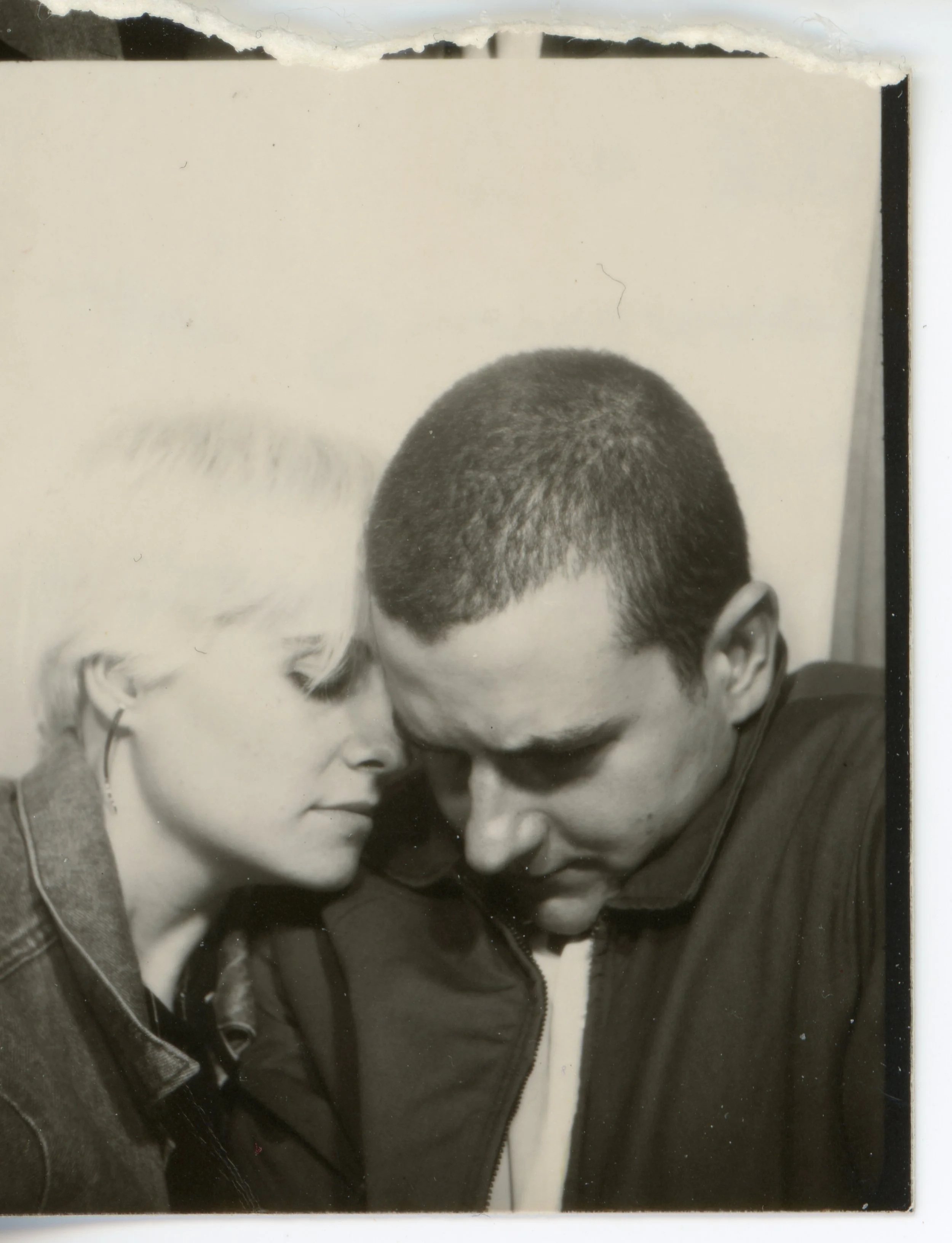
NANCY BARILE
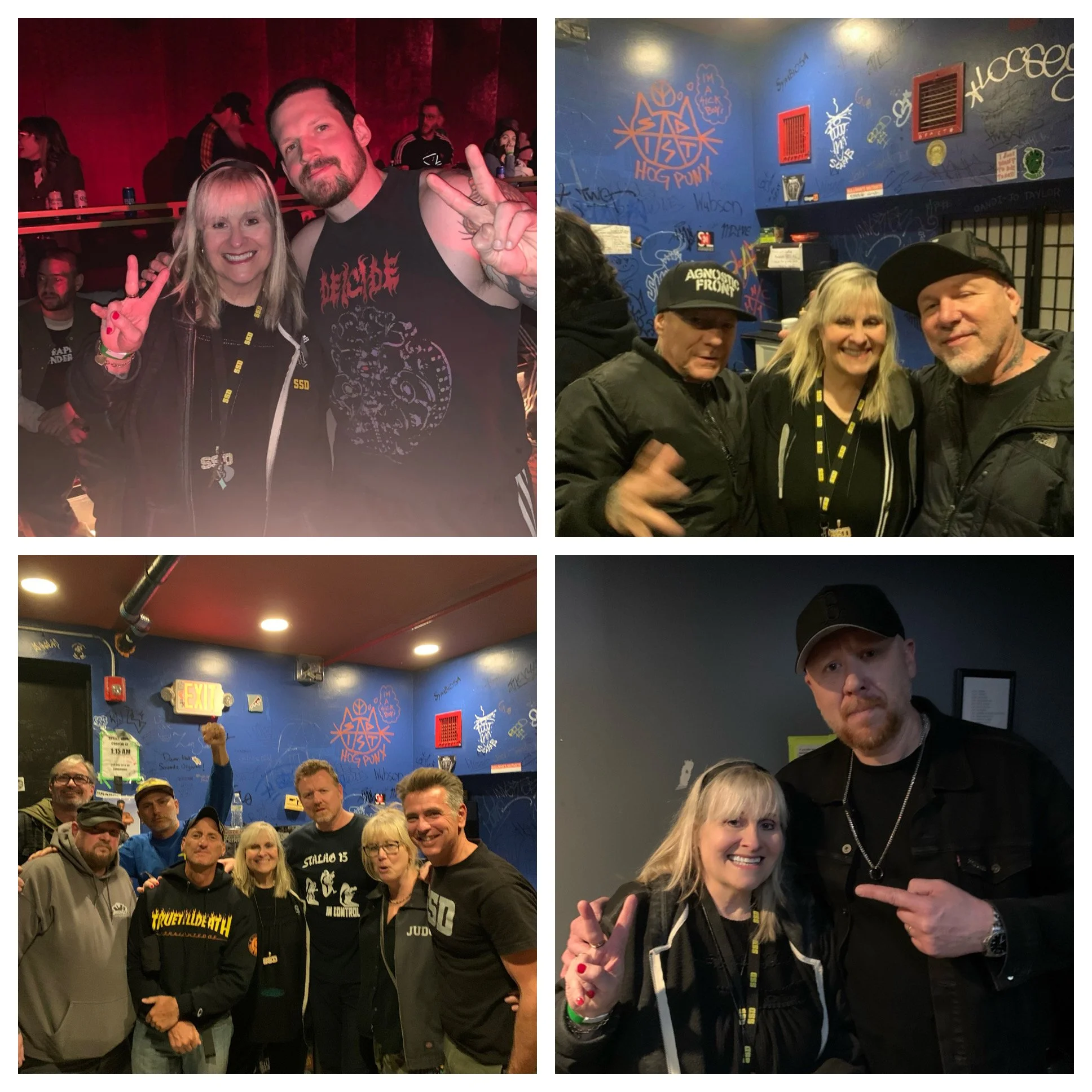
1. All the Cores and More is delighted to welcome the Godmother of Straight Edge and decorated educator Nancy Barile! Nancy, I am thrilled and honored to have you here. I had to chuckle because as I was re-watching your HardLore appearance in preparation for this interview, you shared a story about how you had recently been attending hardcore and punk shows with a young man of 35 at the age of 66. This reminded me so much of my dad and me, who have a similar age difference. He took me to my first “real show” and we have been going to shows together for over a quarter of a century since! Last year, a bouncer was playfully giving him a hard time about his age, and I was like, “Lady, my dad’s first show was Johnny Cash! We’ve seen bands from Harms Way and Every Time I Die to Slipknot together. He gets it!” Have you had any amusing experiences where someone totally misread you?
I think I’ve been lucky that in real life, I haven’t really experienced that sort of thing. That’s probably because most of my time has been spent in Philadelphia, New York, and Boston, where people are very open-minded and accepting and not that judgmental. They are also very respectful, which is nice. The only time it’s kinda happened is online. I’m in several hardcore and punk Facebook groups. On anniversary dates or when I feel like telling a story, I’ll post, and invariably, some dude — usually one born in the ‘90s — will try to refute, contradict, or correct what I’m saying about shows I attended or actually did before they were even born. I have had everything from hardcore to straight edge mansplained to me. I had one creepy guy say my stories were lies, and another say that I only went to ska shows in the Midwest I thought were hardcore shows. I’ve had to deal with men saying women weren’t in hardcore/shouldn’t be in hardcore/shouldn’t be at Punk Rock Bowling/shouldn’t be in the pit. I’ve had some guys who are truly nasty and wildly inappropriate. There is a guy on the Hardcore Worldwide Facebook page, who wrote something so nasty to me in Spanish that several people reached out to me to ask if I wanted them to handle it (I declined). So that’s annoying, but I guess it comes along with the territory that is social media. Happily, I’ve had way more positive than negative experiences online, and I’ve met some really great people through those same groups.
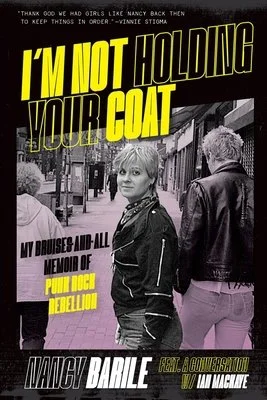
2. I want to talk about your book I’m Not Holding Your Coat: My Bruises-and-all Memoir of Punk Rock Rebellion, published in 2021 by Bazillion Points (readers can and should purchase it here), but I also want to talk a little about what came after in Boston both in the realm of music and in your career as an educator, as well as a couple fun questions to close us out if you’re amenable. To start us off, I’d like to ask how the book came to be in the first place—when the idea came to write the memoir, what the writing and revision process was like, etc.?
I wrote the book for several reasons. The first was because I was afraid the women’s voice in punk and hardcore was being silenced or erased by the men I spoke about. The second reason was because I love Philadelphia, and I felt Philly was always shortchanged in the punk rock history books. Philly had a lot of great bands and many historic, crazy shows, and the people in Philly are some of the best human beings in existence. I wanted to document that. I wanted to show the fan’s perspective, too. And the third reason was because since I was about 5 years old, I wanted to write a book. I was an English Language Arts teacher for 30 years, and books are so important to me. So it was a bucket list goal.
I wrote the book one summer break. I talked to a lot of Philly people to make sure my memory was accurate and to get their perspectives, as well. People like Sheva Golkow, Chuck Meehan, Bryan Lathrop, Lisa Haun, Rikki Ercoli, Allison Schnackenberg, Frank Blank Moriarty, and so many more were instrumental. I was also extremely fortunate to have Bazillion Points as a publisher, and Ian Christe as an outstanding editor. They had fact-checkers on staff, too, which was so helpful. The book came out during the pandemic, and it was an absolutely thrilling experience for me. I am grateful to every single person who bought the book, shared it with friends, reviewed it, and interviewed me about it.
3. I’ve interviewed another Bazillion Points author in Dr. Laina Dawes, and I was struck by the breadth and quality of their publications relating to punk, hardcore, and metal. Indeed, your book is part of their “Core Curriculum,” which I’m sure makes you smile as an educator! How did the relationship with Bazillion Points form?
Oh god, I was so, so lucky! I had been with another publisher before Bazillion, but the relationship was not working out. We both agreed it wasn’t a good fit. We argued about everything from the title of the book to the proper use of semi-colons, which, as an ELA teacher, I found incredibly frustrating. They told me that I would always have final say on how I wanted the book to be presented, but when I stood up to some of their changes, they dropped me. I had been used to working with incredibly honest and ethical people like Ian MacKaye and my husband, Al Barile, so it came as a bit of a shock to me that not everyone operated the same way. They dropped me about a month before the book was supposed to come out, and I didn’t know what I would tell people.
In a stroke of unbelievable luck, writer and author Tony Rettman suggested I query Bazillion Points. I emailed Ian Christe, and almost immediately he wrote back accepting me. Working with a professional publisher and editor made such a huge difference! I still can’t believe my good fortune. There wasn’t a single edit that Ian and I disagreed on. And Bazillion has a huge, international reach, with many successful books in their family, so they knew exactly how to get my book into the hands of people who wanted to read it. I am so thankful things worked out the way they did, and I’m forever grateful to Tony and Ian Christe for making it happen! I often used that story with my students to show them how when one door closes, they need to continue to persevere because another, better door might just open.
4. What has the response to I’m Not Holding Your Coat been in the years since its publication?
No one is more surprised than I am about the response. I figured some friends, relatives, and some diehard punks would get the book. I never dreamed it would take off the way it did, with 10,000 copies out there at this point in time. I’ve been so lucky, and I’ve received great support from around the world. Some of my idols have read my book and that, again, blows my mind.
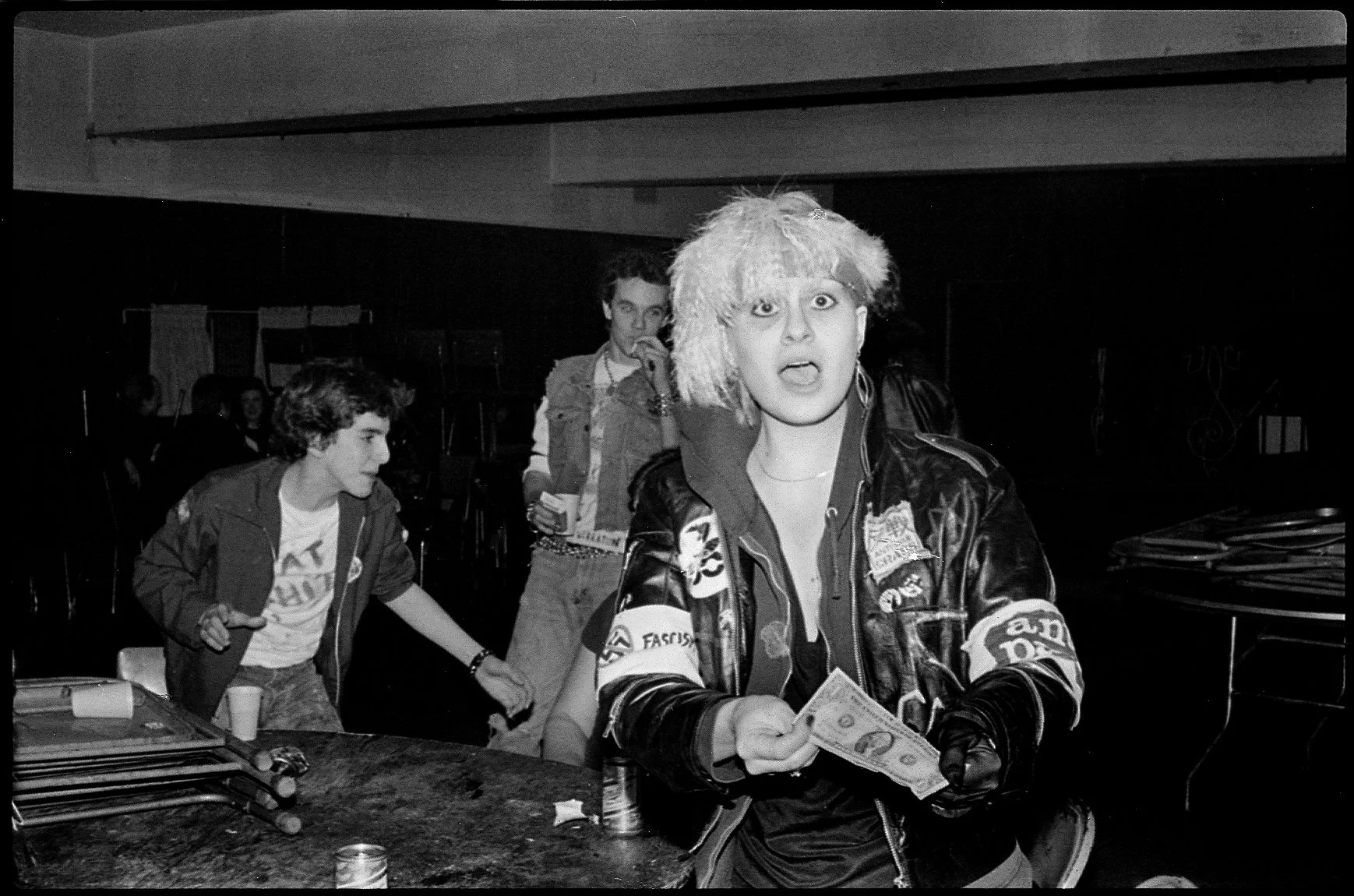
5. You were actively involved in or witness to some of the most seminal moments in punk and hardcore history, and, indeed, I don’t think one can tell the story of East Coast punk and hardcore without mentioning you and your contributions. I don’t want to recount every bit of lore in the book as 1) there’s a ton and 2) we want to save some surprises for readers who haven’t read it yet. I know the HardLore guys asked you about this but I feel like I have to mention the 1981 Misfits gig in New York and your stay at the infamous Chelsea Hotel. It blows my mind that The Misfits were considered kind of lame back then, given their legendary status today. If memory serves, you said you saw The Misfits a number of times and they were excellent live. Who were some other artists or bands—not necessarily just from that era—who just totally blew you away?
In my early days of discovering music, there was simply no performer like David Bowie, and he had a huge influence on me and helped me hone my love of live music — as did Alice Cooper, Roxy Music, Patti Smith, Iggy Pop, Blondie, Queen, and the Ramones. The Cramps were another band, whom I saw open for The Police in 1979, and wow — my suburban, Catholic schoolgirl brain just about short-circuited.
Another number one on that list would have to be early (1983 and before) Bad Brains. My friend Bruce and my friends in the Philly band Autistic Behavior told me that when I saw the Bad Brains, my life would change. As it turned out, they were right. I saw the Bad Brains for the first time in January of 1982. Nothing could have prepared me for the explosiveness of that band. It was a totally visceral experience. I was SO hooked. I made a vow to see them whenever they played in a tristate area region, and that’s a promise I kept. Early Bad Brains were just so amazing, so talented, so good. Anyone who was fortunate enough to see them in that era had a profound experience. But if you saw them after that time, you missed it.
Minor Threat was another band that just blew me away. I saw them 6 times, and I never saw a bad Minor Threat show. The first time was in Baltimore in September of 1982. It was my first date with AL. And — WOW. It was like a punch to the head. They were another band with so much talent and so much energy. After that, I saw them five more times in various cities from Camden, NJ to New York to Boston, and they always brought it. Their sing-a-long quality always made for such fun, physical shows.
And, of course, I loved SS Decontrol. I was a fan before I was a girlfriend/wife. I remember a friend described them best when he said “Seeing SS Decontrol was like standing too close to the railroad tracks.” The first time I saw SSD was at the Paramount Theater in Staten Island, and I was floored. I actually had to take a few steps back from my spot at the front of the stage. There was a power and intensity to that band that was just unmatched.
Other bands I thought were insanely good were the Dead Kennedys — there was no frontman like Jello. I loved Black Flag especially with Dez and also with Henry. I thought TSOL was a cool band, and I liked that Jack gave zero fucks about what anyone thought, and I dug their surfer vibe. And, of course, as you stated, I loved the Misfits. I’d be remiss not to mention that I loved seeing the local Philly bands that made up the heart of the Philly hardcore scene back in the early days: Sadistic Exploits, Decontrol (Philly), Proteens, Autistic Behavior, Informed Sources, Ruin — to name just a few in the space we have. I enjoyed seeing local bands as much as I did seeing national ones.
6. As stated above, you were integral to the development of East Coast hardcore, and the book chronicles not just your punk “origin story,” but your deep involvement in the Philadelphia scene. The book effectively ends when you leave Philadelphia to move to Boston to be with your late husband, the legendary SSD guitarist Al Barile. I’m curious as to what your involvement in the Boston scene looked like.
I have always wanted to be a contributor, so when I moved to Boston, I started to help AL with SS Decontrol. I’d answer mail, help book shows, write up press releases, take care of logistical issues. Years later, I found out a lot of really cool people got those letters from me. One of those people was Megan Jasper, who is now President of Sub Pop Records. She wrote to me on Instagram about how she “looked up” to me, and WOW, that warmed my heart.
One of my proudest moments was when I worked to book Minor Threat, SS Decontrol, and Jerry’s Kids into the Channel in Boston. Now Minor Threat never really cared about money, but I knew the show would draw a ridiculously large crowd, and I was hell-bent on Minor Threat getting the money they deserved. I badgered the manager of the Channel into paying Minor Threat a guarantee of $1250.00 plus a $300 bonus after 750 paying customers (an exorbitant amount of money at the time), and I was relentless. I was a paralegal, so I wrote up a contract and ran down to the Channel to get it signed because I wanted to be sure everything was airtight. After the show, Ian and Jeff sent me a card and Ian wrote: “Thanks for being our Boston manager. You did a fine ass job.” I have that contract framed on my wall. And yes, they got the bonus.
Another of my happiest moments happened when my second book How Much Art Can You Take? which is a photo essay book about the band SS Decontrol, came out. A few years prior, AL was going through some very difficult back surgeries. He was depressed, and I wanted him to see the mark he made on the world, so I asked him if I could start an SS Decontrol Instagram page. To ensure that it was authentic, I only posted stories from band members and those close to them. It just took off, and people suggested I do a book on those stories. AL felt it should be a photo essay book, and he wanted it to feature the photos of Philin Phlash. Phil is Springa’s brother, and he documented many SSD shows, and truly captured the band and the time period. This book was absolutely the hardest project I ever worked on, but when it came out, AL was so, so happy! AL was not super effusive or emotional, and he did not throw compliments around. In a social media post, he said “I have not felt this type of satisfaction for a long time and I want to thank my hardworking wife for what I consider one of her greatest gifts and the completion of a 40-year mission. I can’t thank her enough for getting this project off the ground.” His words meant SO much to me, and I’m glad he was able to hold that beautiful hardback book in his hands. I screenshot that post, and I saved it on my phone, and I look at it frequently because it meant so much to me.
7. You’ve basically been there for the life and times of punk and hardcore, and though punk and hardcore share the same ancestors, I’m curious as to when it became apparent that hardcore had become a separate genre.
The first time I saw Black Flag at City Gardens in 1981, I knew a distinct genre was emerging. As I said, Dez was on vocals back then. There was something a bit more aggressive and physical about hardcore, and for some reason, I just loved it.
8. When did you decide to become a teacher and how did punk influence your practice (I know you talk about the latter point in the book, but as an educator myself your explanation really resonated with me)?
I wanted to be a teacher since I was 5 years old, but my father wanted me to be a lawyer. It wasn’t until I moved to Boston that I had the courage to go back to school to get my teaching degree. When I got a position teaching in an economically-disadvantaged public school, I was woefully unprepared and incredibly culturally incompetent. It was 1995, and I was thrilled to be a teacher. And punk rock taught me I could be whomever I wanted to be, so I was excited to embrace my new profession.
My time in punk in the late 1970s and early 1980s brought me into some fearful situations: I escaped several vicious riots. We were constantly in conflict with the police: undercover cops sicced a dog on me; and, on another occasion, pointed a gun in my face. Locals threw a homemade bomb at my friends and me while we waited outside a show. But I was never as terrified as I was the day I stood in front of my first classroom full of teenagers as a brand new teacher.
During my first year of teaching, I realized many of my students were Cambodian gang members. Those students were not exactly welcomed into the school or the community, so they formed gangs for protection. Punk taught me a great deal about the importance of safety and of camaraderie and common ground — especially at that young age. It also taught me never to make assumptions or judgments about people. It showed me that everyone had a story, a varied and diverse background that made that person who they were. I kept that in mind as I worked with my students, trying to create a space for them at our school and trying to stand up for them. But it was so hard. During my first year of teaching, I lost a student to gun violence, and it was absolutely heartbreaking. I did a lot of gang outreach, connecting my students and their families to services, and trying to create alternative pathways for my students.
Punk rock taught me there are many routes to learning and to success. Not everyone needed to take the same road, and I tried to impart that wisdom to my students. Punk rock taught me a great deal about persistence and determination. I saw that resilience in my students and encouraged it and nurtured it. Punk rock taught me about the power of music, and I used music as a connection in my classroom and in my clubs. I made sure my Future Teachers Club had a music component. And if you know me, you know one thing you don’t do is fuck with one of my students. Punk rock taught me how important it is to defend and support each other in the face of gross injustice. When the New York Post put one of the students from my school on the cover of their rag, implying he had something to do with the Boston Marathon Bombing — DESPITE the fact that Homeland Security had already identified the real bombers — I got that student one of the best attorneys out there, and he sued the fuck out of the New York Post, and let’s just say, it did not end well for them.
Punk rock informed nearly every aspect of my career and my life. That do-it-yourself work ethic I learned from punk rock was enormously important in a school where resources were scarce. It enabled me to obtain books, field trips, guest speakers, club funding, and other resources for my classroom, and it helped me to never take no for an answer when it came to my students. Most importantly, punk taught me not to be manipulated for the sake of a personal agenda, especially when it harmed my students. Even at this age and because of punk rock, I still question authority—a fact that frequently got me in trouble. But I refused to blindly follow the directives of leaders who attempted to compromise my integrity or the integrity of those whom I am entrusted to help. In my classroom, punk rock lived on. Without a doubt, I would not have made it through my first year of teaching without punk rock.
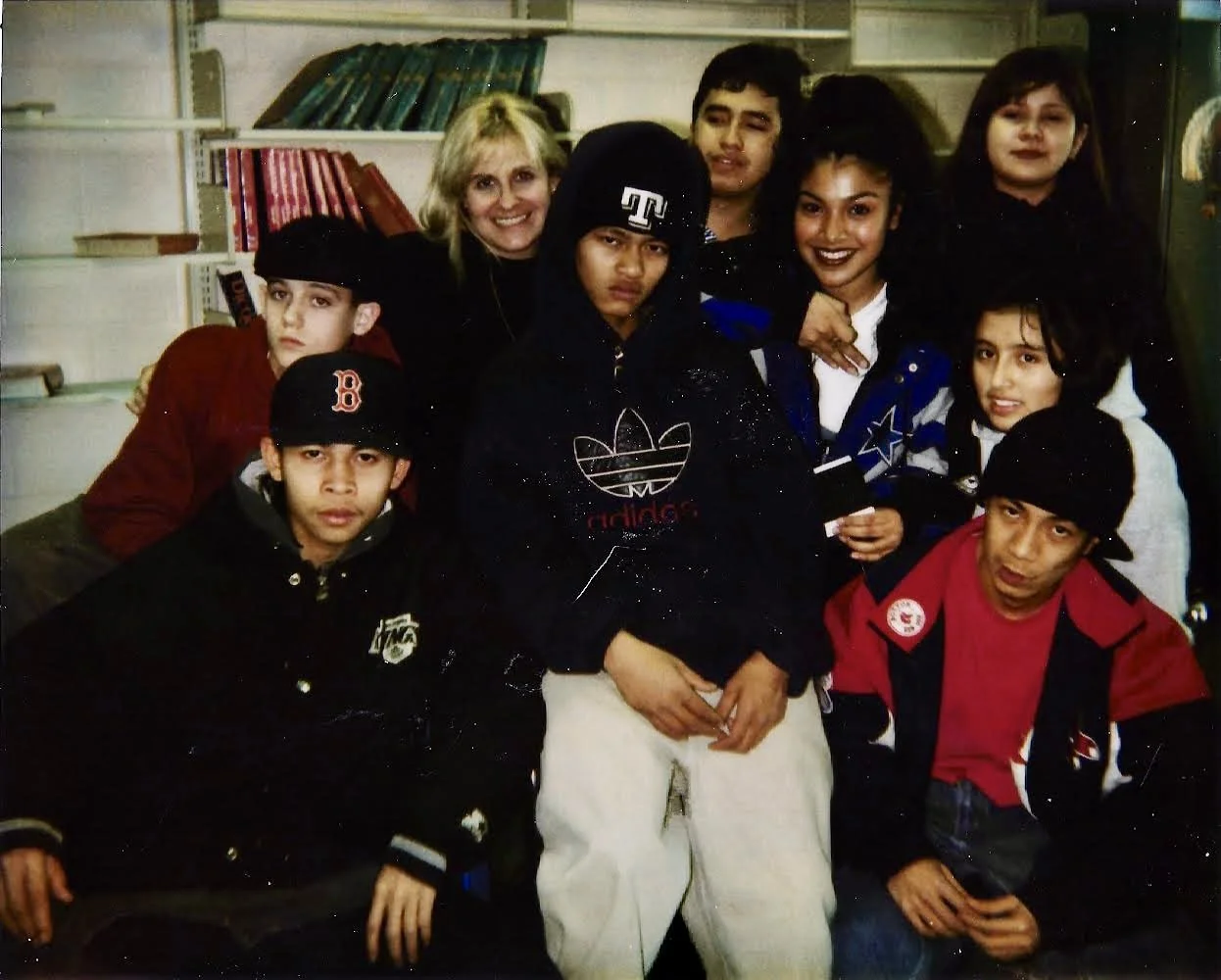
9. What of your accomplishments as a teacher are you most proud of?
To this day, I always love when a former student reaches out to me to tell me they love a book that we read in class or that I made a reader out of them. Right before I retired, my school made the incredibly bad decision to back off on having kids read whole books. It was one of the reasons I retired when I did. If you pick the right books and you teach them well, kids will respond, and that’s always how I did it in my classroom. I remember the friends of students who were taking my class coming to me and asking to borrow the book their pals read in my class because those kids wouldn’t stop talking about them. That was definitely meaningful for this teacher. Reading literature opens doors for students, and it provides mirrors for students to see themselves. The benefits of reading books are so well-documented, and we are now seeing the negative impacts of decisions like the one my school made.
I was also proud of the clubs I created by writing grants for funding. One of them was called Culture Club. With the money from the grant, I took my students to plays, ballets, musicals, operas, lectures, museums. Those trips provided strong opportunities for my students and helped them gain cultural competency. And they were always so much fun. I loved hearing the kids discussing the performances and events on the bus on the way home. I also wrote grants to fund my school’s Rock Ensemble and Book Club, and I felt these clubs were so valuable to my students, as well.
Finally, I was proud of the electives I created, especially my Walking Dead elective, which I used as a platform to teach my students sociology, psychology, business, ethics, and international relations. That class always sold out each year, and we got to Zoom with Jon Bernthal (Shane) and Norman Reedus (Daryl Dixon), which my students and I just LOVED! I also created a Film and Writing class to help my students master the kind of writing they might encounter in college and career, and to help students be aware of the ways the media targets them as a demographic. I basically just used all my favorite movies, and, to this day, students tell me the class had a positive impact on them and made them think about media in a new way.
10. Why do you think so many would-be punk and hardcore elders have decided they’d rather do the kind of squishy grift than stand by principles they once espoused?
I could not begin to speak for those people. It’s something I’ll never, ever understand, but I can tell you this: I find it profoundly disappointing. In many cases, there are some common denominators: lack of education and a desperate need for attention.
11. Okay, last question, and it’s disco-specific. If you could only keep five disco tracks in existence and the rest must disappear for all time, which five are you keeping?
That’s easy because I have those songs on a playlist:
1. Sylvester: “You Make Me Feel (Mighty Real)”
2. Evelyn Champagne King: “Shame”
3. Cheryl Lynn: “Got to Be Real”
4. A Taste of Honey: “Boogie Oogie”
5. Evelyn Champagne King: “Love Come Down” – this one has special meaning because one of the things I loved about AL when I first met him was that he didn’t care what anyone thought about the music he listened to, and it didn’t always have to be all hardcore, all the time. AL and I both loved Queen, Cheap Trick, and AC/DC and a lot of other bands. The first time AL visited me in Philly, I was all about this Evelyn Champagne King song. I had the 7 inch, and I played it A LOT during his visit. He came to like it, too, and it became one of our many “songs.” It’s not a super popular song, but I hear it these days in the strangest places: in an Uber, in the dentist office. I think that is AL sending me a little sign, a little hello.