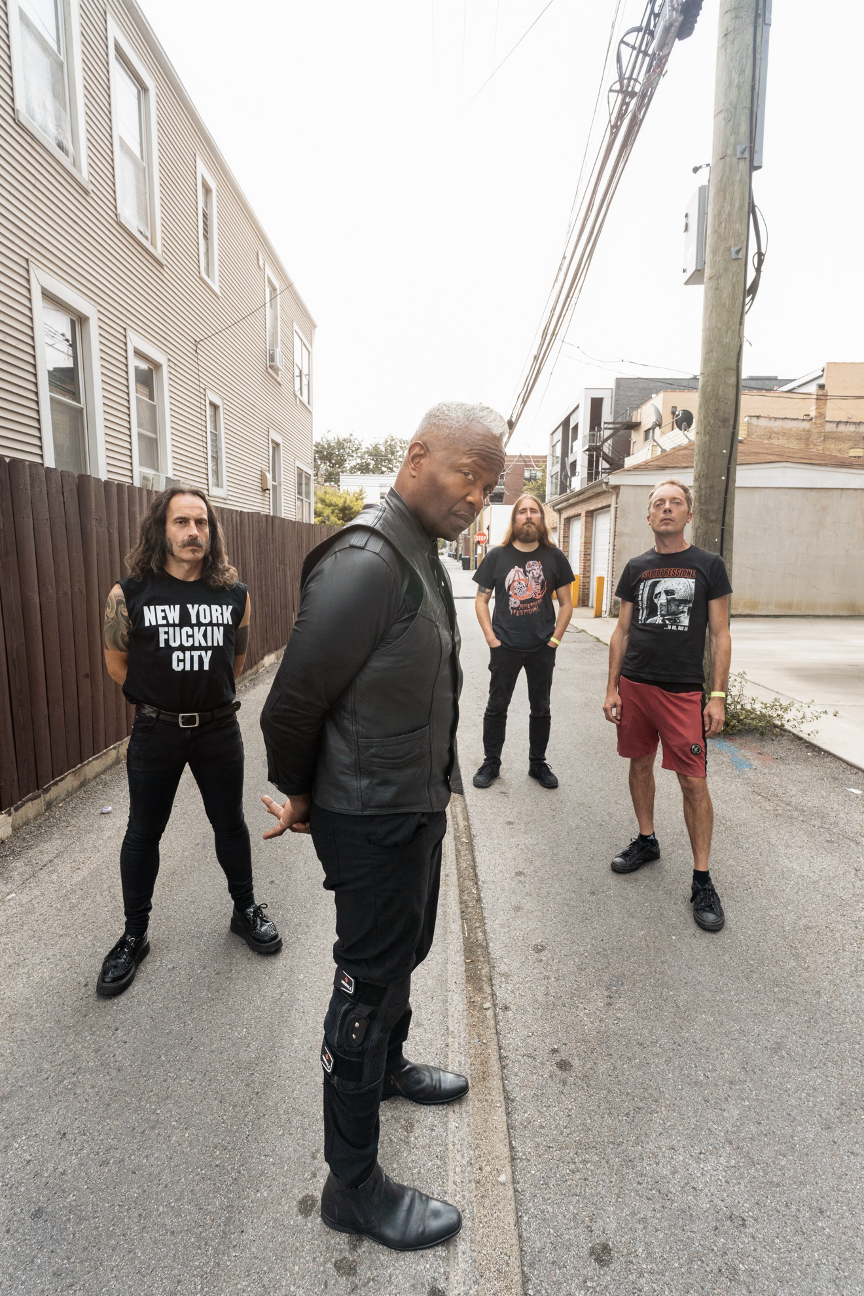
An Interview with Xabier Iriondo of Buñuel
PHOTO CREDIT: ANNAPAOLA MARTIN
1. Hi Xabier, thanks for this interview! If you don’t mind, would you please tell the readers a little about yourself such as where you’re from and your background as a musician and work outside/before Buñuel in case they’re not familiar?
I’m 55 years old, half Basque from northern Spain and half Italian, and I’m based in Milan. I picked up the guitar at 17 and taught myself how to play. Music has been my profession for the past 35 years. I compose and produce both for myself and for others, and over the years I’ve been involved in more than 60 albums released through independent labels as well as major ones. I’ve toured and performed live across three continents. One of the most important chapters of my career has been with Afterhours, an Italian band that emerged from the independent scene in the late 1980s. With them, I released seven albums and played hundreds of shows in Italy and abroad. We started out playing in bars and squatted social spaces, and over time found ourselves performing in arenas, stadiums, and major international festivals. At the same time, I’ve always worked on multiple projects in parallel, moving through very different musical territories — from indie rock to folk, hardcore to electronic music, including contemporary music, free jazz, and live soundtracks for silent films. Since 1997, my focus has increasingly shifted toward experimental and improvised music, designing and building unique instruments and electronic devices that have become an integral part of my sound. Throughout my career, I’ve collaborated with artists such as Damo Suzuki (Can), Greg Dulli (Afghan Whigs), Mark Lanegan (Screaming Trees), Peter Brötzmann, Steve Piccolo (The Lounge Lizards), among many others.
2. How did Buñuel take shape? How did the relationship with frontman Eugene S. Robinson (you can read my recent interview with Robinson here) and the other band members form?
Buñuel came together out of a shared desire — mine, drummer Franz Valente’s, and bassist Pier Paolo Capovilla’s (who played on the band’s first two records) — to form a post-hardcore band. Eugene had previously appeared as a guest on a project Capovilla was involved in, and that experience sparked the idea of reaching out to him to see if he might want to join forces with us. Over the course of ten years, the band went through several bass players before we met French bassist David Hemery. With him, a deep human and artistic connection formed almost immediately. Franz and I have known each other for 15 to 20 years, and we also share an electro-acoustic duo project called MENK’. I can honestly say that Eugene, Franz, and David are extraordinary companions — not only artistically, but on a human level as well. I’m deeply grateful to share pieces of life with them, traveling together and bringing our music wherever we can.
3. Why did you settle on the name Buñuel and do you feel that it is in any way descriptive of the band?
It was Eugene who suggested naming the band after the Spanish-Mexican filmmaker. In Buñuel, there’s a constant tension between ferocity and poetry, between surrealism and hyper-reality — a balance that mirrors much of Luis Buñuel’s cinematic work.
4. Speaking of names, your 2024 LP Mansuetude translates to “gentleness” or “meekness.” How does this contrast with the contents of the record?
Heavy music is often framed through aggressive language meant to define it. We don’t feel the need for that. What we do speaks for itself. The title Eugene proposed — a word that isn’t commonly used today — perfectly captures the contrast we wanted to express.
5. You’ll be touring the US supporting Mansuetude for the second time next month (I’ll have a flyer and links to grab tickets below the interview). What were some highlights from the first go-around?
Some of the most meaningful aspects of our North American tour were immersing ourselves in the continent’s natural landscapes during long drives, experiencing the generosity and professionalism of the musicians we shared the road with — including Lydia Lunch, Today Is The Day, and Spiritual Poison — and discovering places we had never been to before, meeting new people along the way.
6. This might be a bit of an “inside baseball” question, but I am curious about it. What are some of the logistical things that go into not just booking a tour, but doing so internationally?
Our tours are carefully planned by our booking agents, always taking into account the practical and logistical conditions that allow us to give everything on stage each night. Touring isn’t just about playing shows in different cities — it also means driving long distances safely, day and night, getting enough rest, and eating well so that both body and mind remain in balance. Responsibilities are shared, tasks are divided, and we look out for one another, both professionally and personally. It’s what naturally happens when a group of people decide to share a meaningful part of their lives.
7. Are there any unique challenges specific to coming to the US? I’ve heard some horror stories from British bands about trying to get over here, specifically regarding the visa process.
For the U.S. tour, our booking agent Erik Jarvis of Tonedeaf handled the work visa process well in advance, which allowed us to enter the country and do our work without any issues.
8. What are you looking forward to most about the upcoming tour?
What we ultimately want is to bring Buñuel to places we’ve never played before, and to leave people with something that lingers after the show — a feeling, a memory, a trace of what they’ve witnessed and heard. Crossing Colorado, Utah, Idaho, Washington, Oregon, California, Arizona, and New Mexico in the heart of winter promises to be an extraordinary experience.
9. A couple fun questions to close us out: You’ve been granted magical powers to bring five bands or artists past or present, living or deceased, together, at their peak, for a one-night show only. What’s the lineup?
- CAN “Ege Bamyasi” era (40’ set)
- Captain Beefheart & the Magic Band “Trout Mask Replica” era (30’ set)
- This Heat 1979 (30’ set)
- The Who 1969 (40’ set)
- The Dead Boys 1977 (30’ set)
10. Ignoring the logistics of how you’d do it, if you were stranded on a desert island and could only bring five records with you, which ones would you bring?
- Steve Reich “Music for 18 Musicians”
- The Damned “Machine Gun Etiquette”
- Bruce Springsteen “Born to Run”
- Buñuel “Mansuetude”
- A Short Apnea “Illu Ogod Ellat Rhagedia”
1-26-26
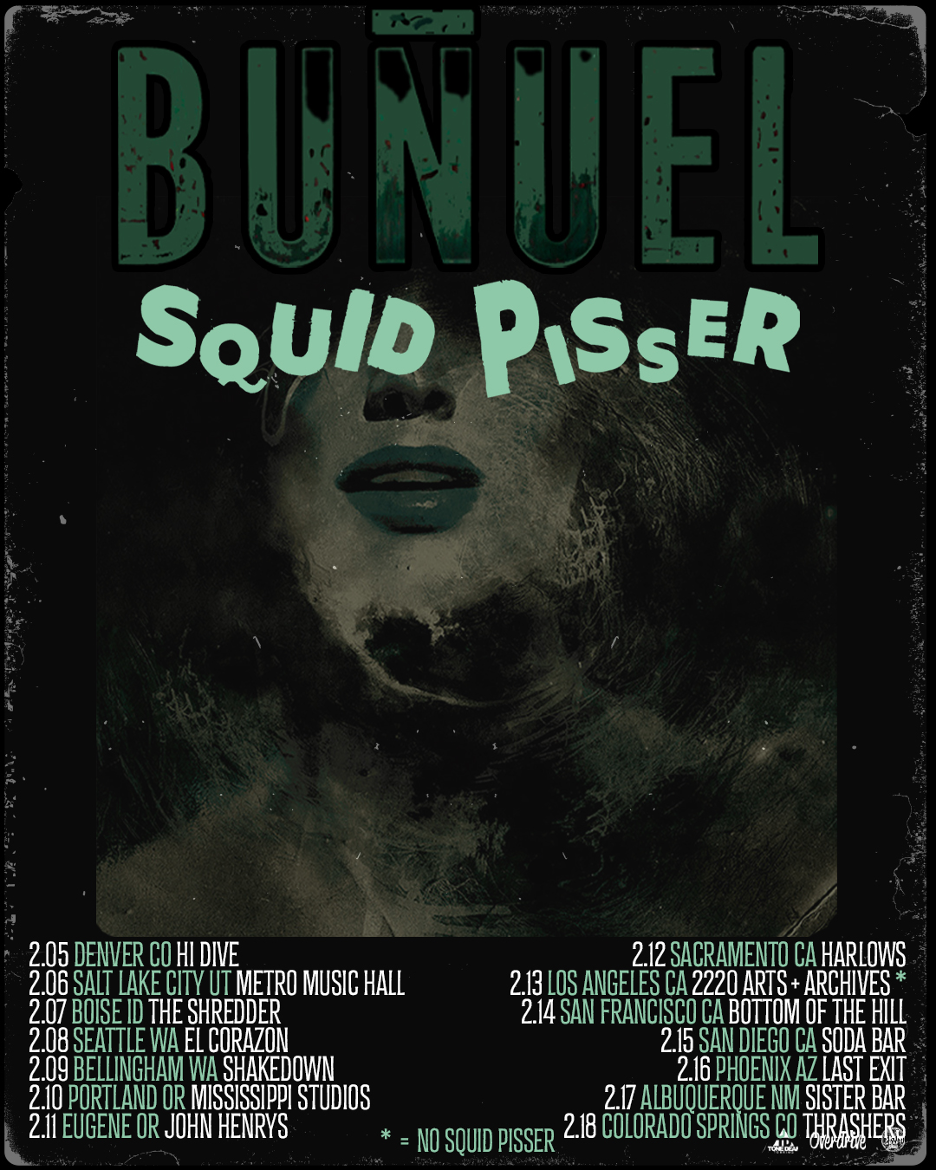
2.05 Denver CO @ Hi Dive TICKETS
2.06 Salt Lake City UT @ Metro Music Hall TICKETS
2.07 Boise Idaho @ The Shredder TICKETS
2.08 Seattle WA @ El Corazon TICKETS
2.09 Bellingham WA @ Shakedown TICKETS
2.10 Portland OR @ Mississippi Studios TICKETS
2.11 Eugene OR @ John Henrys TICKETS
2.12 Sacramento CA @ Harlows TICKETS
2.13 Los Angeles, CA @ 2220 Arts & Archives TICKETS *Bunuel only, no Squid Pisser
2.14 San Francisco CA @ Bottom Of The Hill TICKETS
2.15 San Diego CA @ Soda Bar TICKETS
2.16 Phoenix AZ @ Last Exit TICKETS
2.17 Albuquerque NM @ Sister Bar TICKETS
2.18 Colorado Springs CO @ Thrashers TICKETS