an interview
WITH
eugene S. ROBINSON
1-9-26
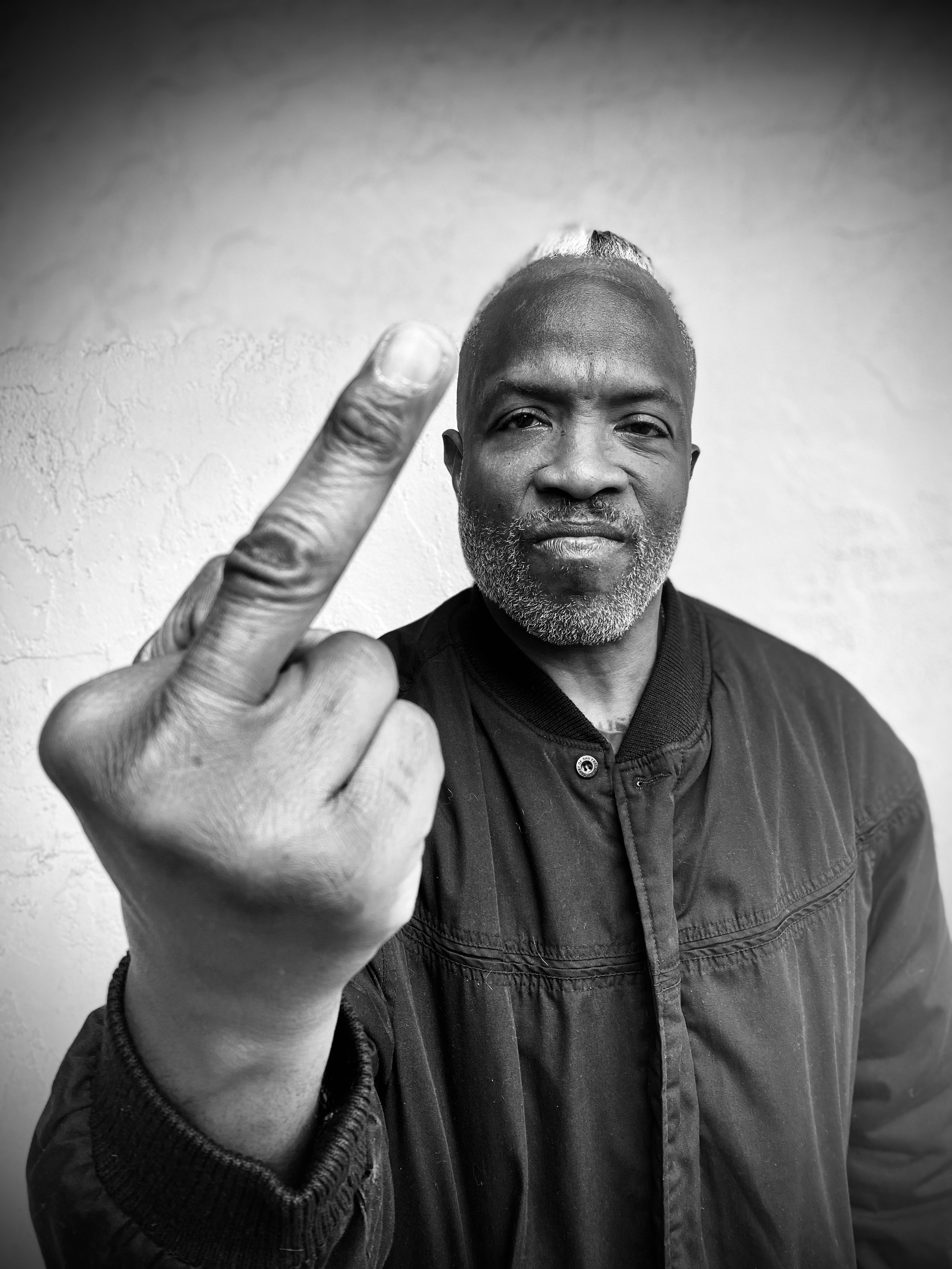
Photo Credit: Michael Killen
1. Hi Eugene, thanks for taking the time to answer my questions! You’ve had a long, illustrious, and interesting career both in and outside of music. I feel like this may be one of those “for a man who needs no introduction” sort of deals, but nevertheless would you be so kind as to provide the readers who may not be familiar with you and your work a brief Spark Notes version?
Shows with the Circle Jerks, Barry Adamson, the Melvins, Jesus Lizard, King Diamond, terrible movies with Bill Cosby, TV commercials with Gus Van Sant, interviews with Samuel Jackson, Billy Bob Thornton, Charles Manson, dinners with Bill Clinton, Karl Rove, Joe Biden, songs with Lydia Lunch, Marianne Faithfull, Jacob Bannon, books on fighting on Harper Collins, a memoir on Feral House, bands Whipping Boy, Oxbow, and Bunuel, and written work that's appeared in GQ, the New York Times, the LA Times, AdWeek, Hustler, Decibel, Wire and many more.
I've also been doing all of the above since 1980. With podcasts, book shows, side projects and stand-up comedy gigs.
If you spend more than four hours a night sleeping? You're just dying.
2. In order to discuss your new single “I’ve Gotta Be Me” from the forthcoming Eugene Sings! record, which is being released by Ako-Lite Records later this year, I feel like it might be important to go backward in order to go forward as it were. You mentioned in your 2019 No Echo interview that the first record you ever bought was The Temptations’ Psychedelic Shack and you’ve also stated that blood relatives of yours have heard you sing some of the songs from the record for ages—is this an homage of sorts to the formation of your musical DNA, a kind of Danzig-does-Elvis but in your own unique voice?
No. Because while I had some input on the songs the song list wasn't left up to me in total. It was intuited by producers John and Ari. Which I prefer, even if I had been thinking of a record like this forever. When they brought it up I was game and even more than that thrilled that they heard this in my voice. The only song I remember recommending was Stella by Starlight...as much for the haunting lyric as for the melody. so less a peek into my musical DNA and much more a case of sager heads understanding where, vocally, I might be able to add some magic to the court proceedings.
3. With the Eugene Sings! era being described as a wholesale rebirth, is it a reasonable supposition that in keeping with the backward-to-go-forward idea this project—along with Whipping Boy’s Dysillusion: A Muru Muru Remix last year—is a sort of full circle moment for you as an artist, at once an ending and a beginning? Do you see any parallels between where you are as an artist now and when with Muru Muru you felt you “had to emotionally leave hardcore”?
This is a great question. In a lot of ways I'm much more FREE than I was when I left hardcore. There was no map about where this should go post-hardcore and even if there was there were not many people there. But people who had already left hardcore were there, waiting, and this let us find new ears for our new voicings. Post-Oxbow, which is where we are now, there are a lot more people there with a lot more willing ears, so not nearly as desolate. However, these songs, their tone and timbre, were chosen because they are existentially crucial. That is: HEAVY. Heavier in a lot of ways than really heavy music and redolent of the stink of mortality that clings to those who age, as we are aging, and not dying. Not quickly anyway. But I don't see things in terms of cycles. I see things in terms of timelines and this is the right time for this in its right place.
4. In your September 2025 interview with George Miller in Devolution Magazine, you mention that period of time as one where hardcore was splintering in different directions (which seems to be a recurrent theme at various junctures with the genre): there were the various permutations of post-punk, including Die Kreuzen a little after you guys (incidentally, I recently interviewed Sahan Jayasuriya about his book Don’t Say Please: The Oral History of Die Kreuzen released via Feral House, who published your 2023 memoir A Walk Across Dirty Water and Straight Into Murder’s Row); the bands trying their hand at metal; the New Wave/darkwave/Gothwave/death rock bands; the 80s version of modern metalcore bands saying their new album is their “heaviest and most melodic yet” and just being buttrock; and then of course it’s also the time period where retrospectively punk and hardcore really became two separate entities. All of this is to say that though the sonic trappings began to vary wildly, you can draw a line from as far back even well before punk as you want to go to a huge number of bands and artists active today who are punk in the spirit and ethos sense but wouldn’t pass the eye test at a Leftover Crack show. Nevertheless—and to bring things back to the single and the upcoming record—you make the points in that No Echo interview that: a) your probably most-well-known project Oxbow was not that detached from hardcore, really, and b) the black artists braving the Chitlin’ Circuit were navigating an even more dangerous environment than the to quote SLC Punk! “fucking aliens” of the punk and hardcore scenes who came later, but in many ways it’s not much of a departure. Rock music is black music, and hardcore is just an aggressive variant thereof. Two questions on this front: 1) do you feel like there might be folks who feel like the comparison of what Screamin’ Jay Hawkins encountered with the experiences of, say, Black Flag, is diminishing the hardships these black musicians had to endure specifically because of their race? and 2) is there a conscious tapping-into all of this history with the new record that makes it as much about let’s call it highlighting legacy through-lines as it is a deeply personal expression?
I'm only mired in personal expression. Any legacy considerations for me only extend as far as family and blood relations. And I'M one of those folks who feel that Black Flag was Black Flag on days when they were scheduled to BE Black Flag. They could also CHOOSE to not be Black Flag whereas Hawkins was always a Negro and always draped with a mantle of that negritude. Black Flag and punk rockers got a taste of what it was like to be un-white in America. But a taste is fundamentally different from a LIFE.
5. Okay, so why Sammy Davis, Jr. and more specifically why “I’ve Gotta Be Me”—both as a choice in the first place and as the lead single?
One of the last shows my grandmother took me to was a Sammy show. My association with Anton LaVey also touched on his relationship with Sammy, so lots of interconnected tendrils. I chose him for the cover of Oxbow's second record King of the Jews and the song "I've Gotta Be Me" hasn't been done enough so that the opening chords create a cliche chuckle in the same way that "My Way" would. Even, and this should always be said, the karaoke song most people are SHOT to? "My Way". But I also love Sammy.
6. I mentioned Ako-Lite Records will be releasing the record—how did that relationship come about?
John's stepdad and Mother brought him into my record store when I had such a thing. He was 14 and I was 26, and the association stuck. His professional successes in the world of videogames has made it possible for us to be able to do stuff we had only previously bullshitted about.
7. Are there some teasers you can give us about the rest of what’s to come with the record?
There is ZERO tongue-in-cheek shit on this record. I mean EVERY fucking note of it. But teasers? Nah....Maybe John has some though....
8. I have a couple of other questions I’d like to ask if you’ll humor me, the first of which is an extremely deep cut but I grew up outside of Portland, Maine and musically came of age not too long before the era I’m about to reference: you performed on the final, title track of doom/post-metal local legends Conifer’s 2008 record Crown Fire as I believe the only vocals they ever had on a song. How did that come about?
I don't rightly recall. Zack and Shadly and John from Conifer became friends and made me an offer I couldn't refuse: we'll fly you to Maine and give you great seafood and you can sing whatever the fuck you want on our new record of songs that do not suck. I was glad to do it and still maintain connections to those fine gentlemen.
9. How have your other practices such as podcasting or writing in various contexts informed your practice as a musical artist? Do you see them as separate?
None of it is separate. Writing, curiously enough, has let me be freer in a lot of ways with the music so I am convinced they are all best suited as the overflow expression of a curious mind. But writing, or at least mine, is painful honest. And that's a good thing to true your instincts up against.
10. This is one of my favorite questions to close with. Ignoring the logistics of how you’d do it, if you were stranded on a desert island and could only bring five records with you, which ones would you bring?
Billie Holiday: Lady In Satin
Johnny Hartman: The Voice That Is
BUNUEL: Mansuetude
Oxbow: King of the Jews
Bomb a Lil Joy: Baby Blue