SARAH KURETZKY ROSSINGTON (THE HARDCORE THERAPIST)
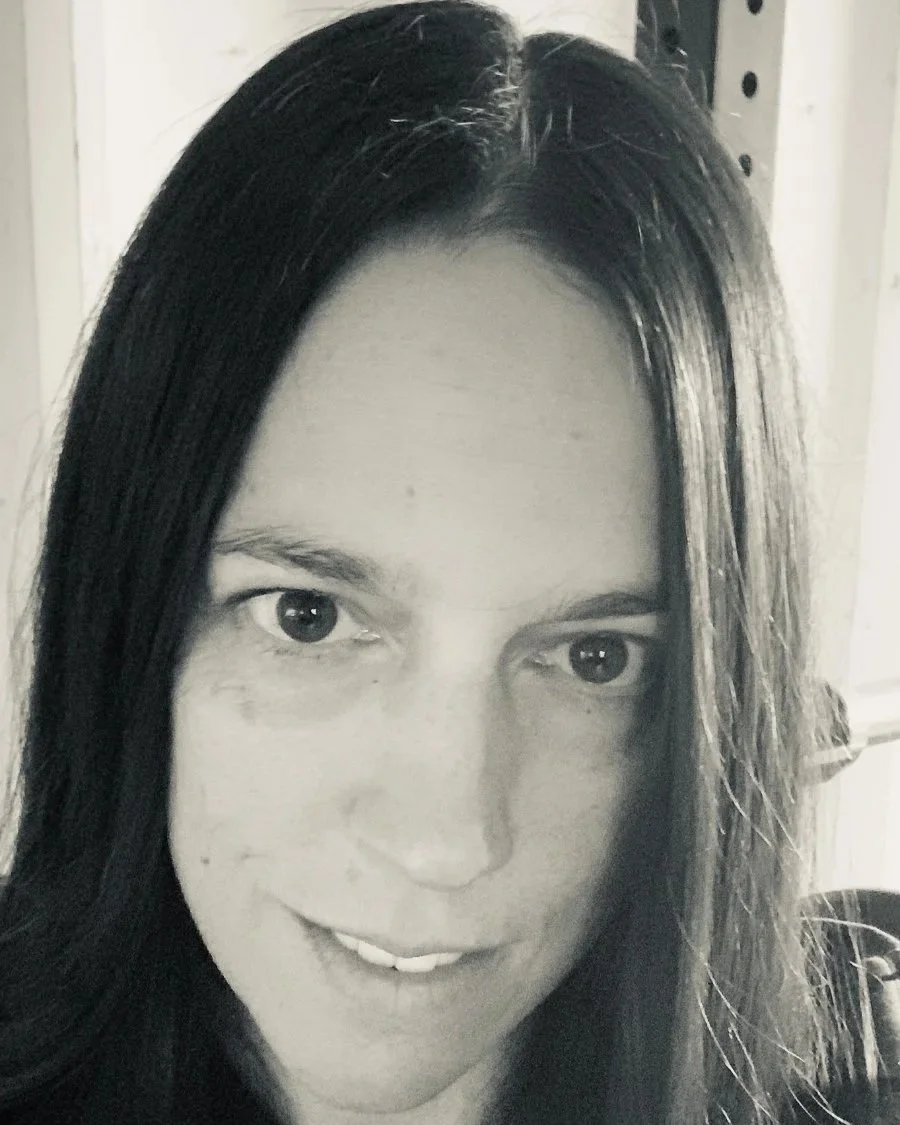
1. Sarah, welcome to All the Cores and More! Would you be so kind as to introduce yourself to the readers and provide an overview of your professional services?
I’m a licensed mental health therapist, licensed school counselor, and owner of The Hardcore Therapist and host of The Hardcore Therapist podcast. I offer virtual therapy and therapeutic coaching. I am licensed as a therapist in Oregon and Michigan and coaching all over the world.
Through The Hardcore Therapist, I also bring mental health conversations into the hardcore and punk community. The podcast explores trauma, healing, sobriety, identity, relationships, grief, resilience, and the emotional lives of people connected to music, creativity, and subculture. My goal is to make therapy language accessible, honest, and grounded in real life.
2. Can you tell us a little about your therapeutic approach? Correct me if I’m incorrectly portraying your practice, but whereas the general conception of health is more siloed—mental, physical, spiritual—you seem to have a more holistic approach and understand that these things all inform each other.
Yes, I do approach therapy from a holistic perspective because I do not believe we can fully separate the mind from the body, relationships, environment, spirituality, or lived experience. Anxiety, depression, trauma, grief, chronic stress, and relationship patterns do not just exist in our thoughts. They show up in the nervous system, in sleep, in digestion, in pain, in emotional reactivity, in how we connect with others, and in how safe we feel in our own bodies.
My therapeutic approach is integrative. I use traditional talk therapy, CBT, mindfulness, somatic work, art therapy, psychoeducation, and nervous system-based tools depending on what the client needs. I want clients to understand not only what they are feeling, but why it makes sense based on their history, attachment patterns, nervous system responses, and current stressors. I also believe insight is important, but insight alone is not always enough. People need skills, practice, regulation tools, and new relational experiences to create real change.
I often tell clients that symptoms are information, not character flaws. If someone is anxious, shut down, overexplaining, people-pleasing, angry, numb, or self-sabotaging, I want to understand what that response has been trying to protect. From there, we can work on building healthier coping skills, clearer communication, stronger boundaries, and a more compassionate relationship with the self.
Spirituality can also be part of the work when it matters to the client. I do not impose that on anyone, but I do believe meaning, purpose, values, and connection are deeply important in healing. For me, therapy is not just about symptom reduction. It is about helping people become more regulated, more self-aware, more connected, and more aligned with the life they actually want to live.
3. What made you want to work with people in this way?
I think what made me want to work with people in this way is that I have always been interested in the whole person, not just the symptom. My years as a teacher, personal trainer, holistic health coach, and therapist taught me that people do not just need information — they need to understand themselves. They need to understand the way they think, cope, move through the world, and repeat patterns in their relationships, bodies, and lives.
My own life experiences also shaped the way I practice. I understand anxiety, perfectionism, people-pleasing, grief, relationship pain, and the process of rebuilding a relationship with yourself. Therapy, to me, is about helping people understand their patterns without shame and then giving them tools to create something healthier.
4. Tell us about your podcast, The Hardcore Therapist, and some guests you’ve had and major highlights.
The Hardcore Therapist is where mental health and the hardcore/punk community meet. I started it because I wanted to create a space where people could talk honestly about trauma, grief, addiction, sobriety, relationships, identity, healing, and the emotional lives behind the music. Hardcore has always been a place for intensity and truth, and therapy gives us language for what we carry and how we heal.
I have had the opportunity to interview people from across the hardcore and punk world, including musicians, writers, creatives, and people in recovery and service-based work. Some guests have included Mike Judge, Kelly Leonard (XsisterhoodX), Civ, Pat Flynn, Karl Buechner, Popeye Vogelsang, Chaka Malik, Kate108, Travis Shettel, Walter Schriefels, Kevin Seconds, Alison Braun, Chris Wrenn, and Kira Roeseler. Each conversation has been different, but the common thread is always the same: how music, community, pain, resilience, and purpose shape who we become.
A major highlight has been realizing how many people in this scene are willing to talk deeply about mental health when the space feels real and nonjudgmental. The podcast has also grown into something bigger than interviews for me. It has become a way to build community, offer resources, reduce shame, and remind people that healing does not have to look polished. It can be loud, honest, messy, and still deeply meaningful.
5. When one purchases The Hardcore Therapist merch, where do the proceeds go?
When someone purchases The Hardcore Therapist merch, the proceeds go directly back into providing mental health support for people who are uninsured or underinsured. That is a huge part of the mission for me.
Through this work, I have provided over 500 hours of free and reduced-fee therapy for people who needed care but did not have access to affordable services. The merch helps support that continued work, so when someone buys a shirt, hoodie, sticker, or other item, they are not just supporting the podcast, they are helping someone receive therapy who may not otherwise be able to afford it.
6. When and how did your love for hardcore start?
My love for hardcore started in seventh grade with a mixtape from my friend Chris Reilly. He made it by taping the local community college radio show on Sunday nights, and that tape opened up a whole new world for me. There was something about the energy, honesty, urgency, and emotion of the music that immediately made sense.
By 1988, I started going to shows regularly, and that changed everything. Hardcore was not just music anymore it was community, identity, release, and belonging. It gave me a place for intensity and truth at a time in my life when I really needed that. That connection has stayed with me ever since, and it is a big part of why The Hardcore Therapist exists today.
7. Let’s throw one of my favorite questions in here, the “desert island five”: ignoring the logistics of how you’d do it, if you were stranded on a desert island and could only bring five records with you, which ones would you bring and why?
I hate this question because it is so hard for me to choose. And honestly, I do not think they would all be hardcore records. If I am stranded on a desert island, I want each record to give me a different mood, memory, and feeling.
I think my five would be Start Today by Gorilla Biscuits, It All Comes Down to This by Bane, Slip by Quicksand, Rochambeau by Farside, and Songs of Separation by 108.
So I guess my desert island five would not just be about favorite records. It would be about having different parts of myself represented there with me.
8. Tell us about your journey to Krishna Consciousness—was the initial seed planted by hardcore?
My first real exposure to Krishna Consciousness came through hardcore. In 1992, I saw Shelter and 108 at The Grounds in Detroit, and I remember Raghu doing kirtan. I was so energized by it. There was something about the sound, the devotion, and the feeling in the room that made me want to learn more.
But like many things in life, the seed was planted long before I fully returned to it. It took until right before COVID for that interest to really come back. My friend Kulavira and his family began talking with me more about Krishna Consciousness and brought me to the temple, and that opened the door again.
Once COVID stopped everything, I started watching Wisdom of the Sages daily, and that became a steady part of my life. Later, my Godbrother Krishna Das from Invocation and Altar invited me into Tripurari Swami’s sangha. Eventually, I decided to ask for shelter from Tripurari Swami, and it has continued to be a very meaningful journey.
I have always been a seeker, so in many ways Krishna Consciousness felt like a natural home for that part of me. Looking back, I see it as mercy that the seed was first planted through hardcore and eventually led me to take shelter under Tripurari Swami.
9. What are some changes you’re hoping to bring about in the world?
This is a hard question because I know I am just one small part of this world. But if I can bring more kindness, compassion, and honesty into the spaces I am in, that matters to me.
I hope my work helps people understand that self-love is not selfish. The way we relate to ourselves impacts the way we relate to everyone else. When people begin to understand their patterns, regulate their nervous system, heal shame, and treat themselves with more compassion, they are able to show up differently in their relationships, families, communities, and the world.
So I do not know if I am trying to change the whole world. I think I am trying to help create small ripples of healing, self-awareness, kindness, and compassion wherever I can.
10. Amen. Thanks so much for taking the time to answer my questions! Any last words for the readers?
Thank you so much for taking the time to ask such thoughtful questions. I really appreciate the opportunity to share more about my work, my love for hardcore, and the way mental health, community, and healing all connect for me.
My last words would be: be kind to yourself, stay curious about your patterns, and remember that healing does not have to look perfect to be real.
And of course, listen to The Hardcore Therapist podcast.