KIRA ROESSLER
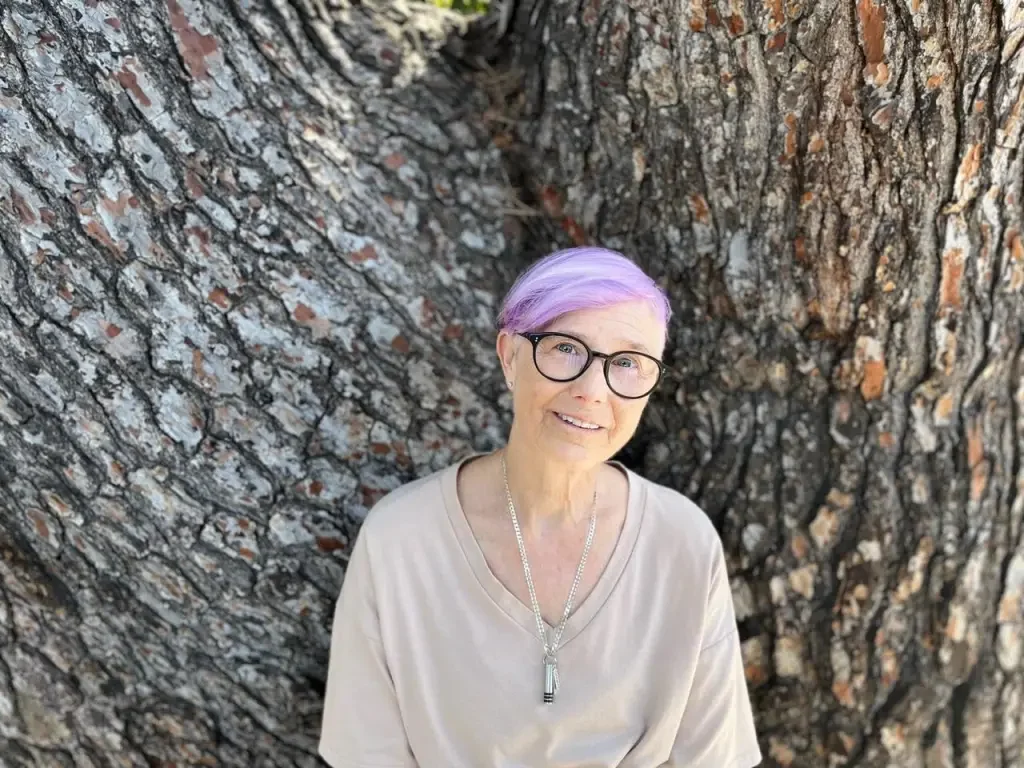
1. All the Cores and More is delighted and honored to welcome a punk rock legend in Kira Roessler—Kira, welcome! You’ve had a long, illustrious, and interesting career both in and outside of music. I feel like this may be one of those “for a woman who needs no introduction” sort of deals, but nevertheless would you be so kind as to provide the readers who may not be familiar with you and your work a brief Spark Notes version?
My name is Kira Roessler, I am a bass player for the last fifty years, have played in bands for 49. I was in Black Flag, Twisted Roots, dos, and am releasing my second solo record on July 10, 2026. I have lived in Los Angeles for most of my life. I like dogs and am allergic to cats. I am married to a guy named Tim.
2. Walk us through your early life if you’d be so kind. What were your formative experiences as well as your musical influences? What made you want to pick up a bass?
I played classical piano from 6 years old until 11 when I quit. My brother has been a large influence in my life and when his prog rock band lost its bass player, I started playing bass to be able to join the band. I practiced a lot of hours but was never good enough to join.
I listened to a lot of David Bowie and Rolling Stones during this time.
3. When and how does punk rock enter the picture?
After his prog rock band Paul got into punk rock and we started the first band I was in Waxx with Paul on drums and me on bass. Two of his friends were on guitar and lead vocals. Two of his high school friends had started a punk band named the Germs and that was my first punk show - at the Whisky in Hollywood. The first time I played live was also there.
4. You join the legendary Black Flag when they’re basically done with hardcore. How did that come about, and—you could easily write a book on this I’m sure, so be as long-winded or concise as you’d like—what was that experience like?
You do understand that the word “hardcore” never crossed their lips - before or after I joined. Our sets always included a few songs from the Damaged era, so does that mean we were “partly hardcore”? I joined because I jammed with Bill and Greg on some of their instrumental stuff and they liked the way I played. The only obstacle I put forward was finishing my degree at UCLA. Our schedule would be affected by that.
When I joined Black Flag the record My War had just been released, so the concept of Side 2 and the three slow songs found there had already been decided. I had absolutely no say-so about what we would do next, but there was more to record … Tours needed happening to support My War …. That was already what was next for the band. These decisions were made.
Black Flag was my favorite band when I joined them so my experience was great. We recorded Slip It In and Family Man. We did a spring tour of America and then went to Europe (countries I had never been to). The fact that some of the fans still wanted short hair and fast songs wasn’t something we discussed, we just kept moving forward with the next thing. Songs from Slip It In were already in the set, plus My War and Damaged.
5. I understand you studied applied engineering at UCLA. How does one go from that to dialogue editing? When did you know you wanted to work in film and television, and how did you enter into that career?
I was in computer programming for eleven years and kind of sick of the corporate world. My brother introduced me to a guy who was doing a student film for someone at USC and had gone there themselves. He was starting a small company that did sound for films. After about six months I asked him to hire me to answer phones and run errands until I had learned sound editing. Once there I realized that the guys preferred sound effects and foley, so I started specializing in dialogue.
6. I’ve heard that there are far more punk and hardcore “kids” in the film and television industry than most folks realize—does this align with your experience?
Yes and no… I mean actual punk kids who were active “in my day” are rare. But punk is much more normalized these days so I meet people who know who I am or think it’s cool when they find out.
7. I know it’s a lot of ground to cover, but if you would, walk us through some of the major post-Black Flag musical highlights up to (but not through) your 2021 solo album.
Well for thirty years I played in a band called dos with my ex husband Mike Watt. During the early years I would fly out during his Firehose tours and play a few shows opening for them. In later days we would do gigs around LA. We went to San Francisco twice to play there. During COVID I produced a record of songs that my guitar player friend Glenn Brown wrote and that I had played bass on. That record is on Bandcamp and called Thud by Boss Vagrant. I played bass on two records with a band called Approximation. I had another two bass project that worked on and off called Awkward - we have an EP out on Bandcamp.
8. What was the writing and recoding process like for 2021’s KIRA, and what sonic and thematic ground do you explore?
This record was recorded totally like a virtual band, sending files to Cleveland for the guitar player Glenn Brown, and to a drummer named Dave Bach who I still work with. Then my brother Paul would also receive these packages to create with. It was Paul who convinced me to put a bow around some of these songs (there were many) and put out a record. He works at Kitten Robot Studios and has a label called Kitten Robot and were willing to put it out.
The sonic ground we had been exploring together for many years, building songs remotely. My songs tend to be quite sparse … with two basses often. The thematic ground was the life and death of my dog Hombrito… with some like sounding songs also included.
9. On July 10th, your second LP, Enigma, will be released by Org Music. What was the writing and recording process like for this record? The single “How Could You” is out now, but are there some teasers you can give us about the rest of what’s to come with the record?
Yes! This record takes a big turn from my first solo record in the recording process. The writing process was the same … I take two basses and a vocal melody and then collaborate with others. But “Enigma” the song is about my dear friend Glenn Brown who died a couple years ago. So one of the major ideas was to include his playing on two songs there had been demos of.
But the major recording change was because of the fact that we had really created a band, played some live shows… and Paul, Dave and I built a lot of confidence. So the recording process changed. I would work with Paul basically throwing out the second bass and having him bashes parts on those lines but with a pianistic flair … making chords a part of the initial ideas. Then I would work with Dave to collaborate more intensely on the drum parts. Then we recorded all the songs live - Dave and I with Paul on seven songs which was a total departure in the process. I feel the record reflects that band feeling,
In terms of thematic content there are a range of emotions explored here … and we played live along with those demo guitar tracks on two songs. I’ve mentioned the song “Enigma” which is about the friend I lost Glenn. “How Could You” comes after a confrontations when you’ve had a period to cool down. “You Will Feel My Pain” which is also out as a single is darker, angrier, moodier … addressing the fact that my darkness will affect others.
10. Thank you so much for taking the time to answer my questions! Do you have any last words for the readers?
Express your feelings somehow - paint, play, dance, whatever…. Use your emotions as fodder for art.
I hope my record inspires emotions in the listener.
Thanks for the chat!