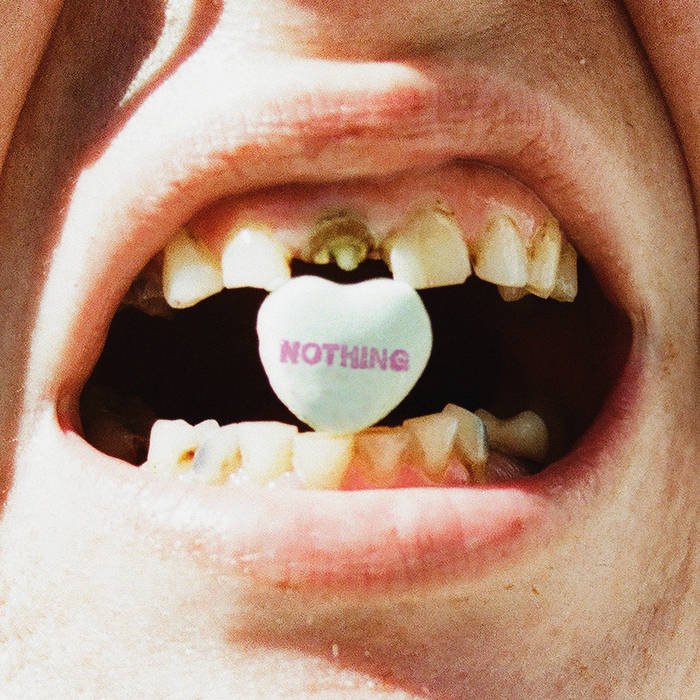
NOTHING A SHORT HISTORY OF DECAY REVIEW
3-12-26a short history of decay, Nothing’s fifth solo LP and first for Run For Cover Records, is about physical decline, frailty, and, yes, decay, but it’s also a reckoning and a nakedly personal record that confronts trauma and finitude. As frontman and bandleader/focal point Nicky Palermo reveals, “I’m writing about things that I’ve never really talked about before. Things I’ve always been scared to write about,” whether that’s growing up with an abusive father or the onset of essential tremors, a progressive neurological condition similar to Parkinson’s disease that causes uncontrollable rhythmic shaking—both body and voice. In baring everything, this included not trying to hide those vocal tremors nor hiding from himself or his past, no matter how frightening. For Palermo, that meant an “overwhelming sense of honesty within [him]self,” brought about by actually taking a step back from the consistent grind of touring and recording and forcing himself to look in the mirror. “One of the reasons why I like to tour and love to be busy is that I don’t have to look internally,” Palermo says. But in allowing for a pause, this is precisely what Palermo did, “wrestling with [him]self” and “dissecting the regret,” coming to terms with the fact that “things have changed, my body’s slowing down. I’m feeling exactly the way that I treated myself the past 12-13 years.” The result of this introspection and radical honesty is the unflinching a short history of decay, a record that is both ornate and stripped-bare, universal and deeply personal, lush and raw.
Album opener “never come never morning,” which deals with Palermo growing up with an abusive father, starts out softly—vulnerable, yearning, wistful, subdued, building into an expansive yet delicate Sigur Rós-like track complemented nicely by the addition of horns, a journey from the halcyon days of youth to the grim realities of age and back from the vantage point of the present. The track’s full-circle structure serves as a microcosm of the band’s oeuvre starting with their 2014 debut Guilty of Everything. Palermo, reflecting on a short history of decay, states that “Between the point of clarity and this overwhelming sense of honesty within myself…This feels like an exact full circle moment to that first record.” As I was formulating how I wanted to approach this review, I kept coming back to the idea of the hero’s transformative journey from Joseph Campbell’s 1949 book The Hero with a Thousand Faces as a useful framework for conceptualizing the contents of the record situated in the context of both the band’s sonic and Palermo’s personal evolution. In mythology and fiction, the hero must reluctantly leave a place of relative comfort to set out into the unknown, eventually descending into the underworld (literal or figurative) and, typically at the “all is lost” point, confronting the power that has the greatest hold on the hero’s life, usually, as Campbell frames it, a paternal figure: “The problem of the hero going to meet the father is to open his soul beyond terror to such a degree that he will be ripe to understand how the sickening and insane tragedies of this vast and ruthless cosmos are completely validated in the majesty of Being.” This stage is the crux of the journey, with its resultant transformation and healing of the “father wound” before the return. If you find the idea of a hero too grandiose, consider that it does require incredible bravery to confront and overcome that which holds power over one’s life and this transformative journey can really pertain to anyone—not just mythical or fictional figures—who undertake it.
The doppelgänger of “never come never morning” is “essential tremors” at album’s-end with its similar opening and ultimate sonic expansion, dealing with similarly weighty subject matter. In between “never come never morning” and “essential tremors,” we have such highlights as “the rain don’t care,” with its strong Radiohead-”Karma Police” feel; the gorgeous and spacious “ballet of the traitor,” a dreamy and ethereal ride out into the cosmos; “nerve scales,” which feels like Simon and Garfunkel’s “The Sound of Silence” as conceived by an 80s “college rock” band and stretched out into the darkened night sky; and “toothless coal,” a 90s alt-rock/grungegaze track mixed with some industrial elements. “cannibal world” is probably the most interesting song on the record, sounding like Jesu overlaid with My Bloody Valentine with some drum-n-bass and Nine Inch Nails in there.
It’s easy to see why Nothing has the passionate and dedicated following they do. Before even considering how central Nothing is to not just the modern hardcore-adjacent alt-shoegaze boom but alternative music more broadly, on its own merits, a short history of decay is evidence enough. Palermo calls the record a “final chapter,” a closing of the circle, and it is, but to quote Semisonic in “Closing Time”: “Every new beginning comes from some other beginning’s end.”
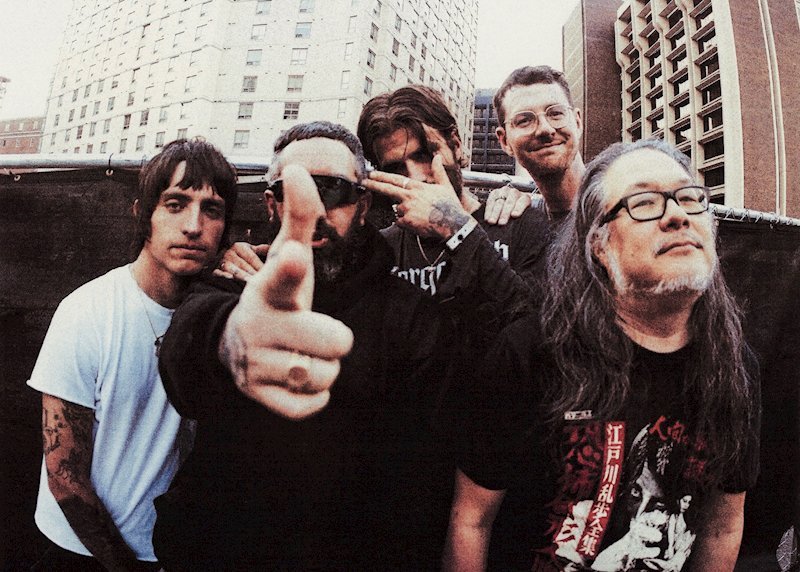
PHOTO CREDIT: LUKE IVANOVICH