KATIE FROST
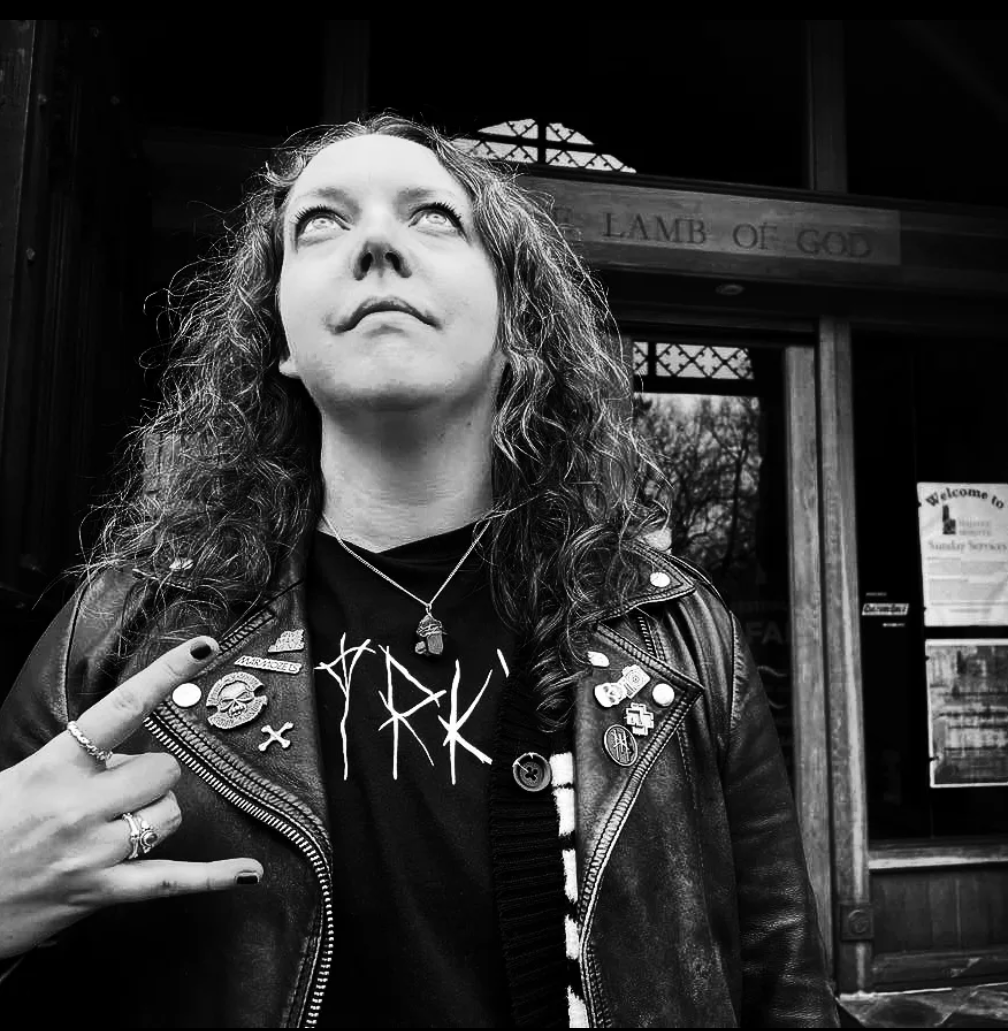
1. Hi Katie, welcome to All the Cores and More! Would you please introduce yourself for the reader—where you’re from and what you do in the realm of music in broad strokes?
Thanks for having me! My name is Katie and I am an award-winning freelance photographer based in London specialising in rock and metal live music photography. I shoot gigs at venues of various sizes in and around London, and outside of the UK I have photographed Tons of Rock Festival in Norway every year since 2015 (apart from during the pandemic).
I have been the Photo Editor of The Moshville Times since 2018, which involves applying for press passes, coordinating our photography team, and processing their images for publication online, as well as shooting shows for the publication myself.
Outside of photography, I work part-time for Music Venue Trust – a charity working to secure and improve grassroots music venues across the UK. I occasionally get to do some live music and events photography for the charity also.
2. When did your love for music start and who were some of your foundational influences?
I have been on a bit of a journey in terms of what sort of music I enjoy listening to! I was brought up on ABBA, The Carpenters, The Rolling Stones, and The Beach Boys on family car trips, and then at school and University I became into bands like Travis, Feeder, Ash, and Green Day, plus the likes of Avril Lavigne, P!nk, and Kelly Clarkson. My first gig was Travis at Brixton Academy in 1999 when I was 15 years old.
In 2009 my partner at the time started to introduce me to metal through playing me bands like Amon Amarth, Machine Head, and Trivium, which then lead me to start exploring other genres of metal. I would say that currently one of my favourite genres to listen to is atmospheric black metal (such as Grima), but I am also a big fan of melodeth, folk (such as Heilung), plus anything theatrical and fun (like Sabaton).
3. What made you want to get into photography and immerse yourself in the world of live music?
When I first started going to see live music I wanted to capture what I was experiencing, and used to take along a little point-and-shoot (before camera phones were a thing) which I got some decent shots out of when I was at the barrier, but I was struggling with getting the crisp shots I wanted, so I was very kindly purchased a DSLR in 2015 which I learned to use largely on my own, via YouTube videos, and by shooting lots of gigs. It was also in 2015 that I started out as a House Photographer for MAMA & Co (who, at the time, ran The Barfly, The Borderline, The Garage, and Hoxton Square Bar + Kitchen amongst others). In the same year, whilst shooting a gig at The Garage, I met someone from The Moshville Times who asked if I was interested in joining them as a photographer, and from that point I got to shoot all sorts of gigs and a wide range of venues around London.
Also in 2015 I saw a post on Facebook advertising a photography workshop at Tons of Rock Festival in Norway. I went along and learned so much from Per Ole Hagen who was leading the workshop (about pit etiquette, photo composition etc) that was really the start of me being so passionate about music photography. I returned to Tons of Rock the following year for a continuation of the workshop, and then in 2017 I went along as a press photographer with The Moshville Times, and have returned every year since (apart from the pandemic years)!
4. Are there some prerequisites for your line of work? What educational background and/or experiences did/do you pull from?
I have no formal photography training at all, but I was always the one on family holiday and evenings out with friends who had a point-and-shoot camera to capture everything.
A lot of it is learning through doing, and making sure that you can capture shots in a poorly-lit small venue with no photopit. Anyone can take a decent shot in a well-lit arena with a photopit, it is when you have really struggled to try and get your camera to focus on a fast-moving metalhead in an almost pitch-black room without using flash whilst trying not to get your gear kicked into your face by people in a mosh-pit that you learn how to get the best out of a situation!
Learning general pit etiquette is also really important – always be friendly and kind, listen to security and do what they say (as it is probably for your own safety), don’t be a dick (holding your camera over your head if other photographers are behind you, using flash when you have been told not to, standing in one spot in the photopit for too long, or leaning over the front of the stage which gets in the way of the artists as well as in the way of the other photographers’ shots). You should also never post your credentials online (sticky passes etc) as it is a security risk.
5. What’s some other practical advice you have for anyone looking to get into the world of photography?
Contact your local grassroots music venue and ask if you can come along to some shows with your camera. These venues usually don’t have the usual “three songs, no flash” rules of larger venues, but don’t spend the whole show blocking the view of people who have paid to attend the show.
You can also reach out to local small publications that might be looking for a photographer, which will allow you to work up to shooting bigger bands at larger venues.
6. Who are some of the major artists you’ve captured on film? Are there any experiences that stand out in particular?
Some of the bigger names that I have had the pleasure to photograph include Slayer, Alice Cooper, Rob Zombie, KISS, Mayhem, Slipknot, and Judas Priest.
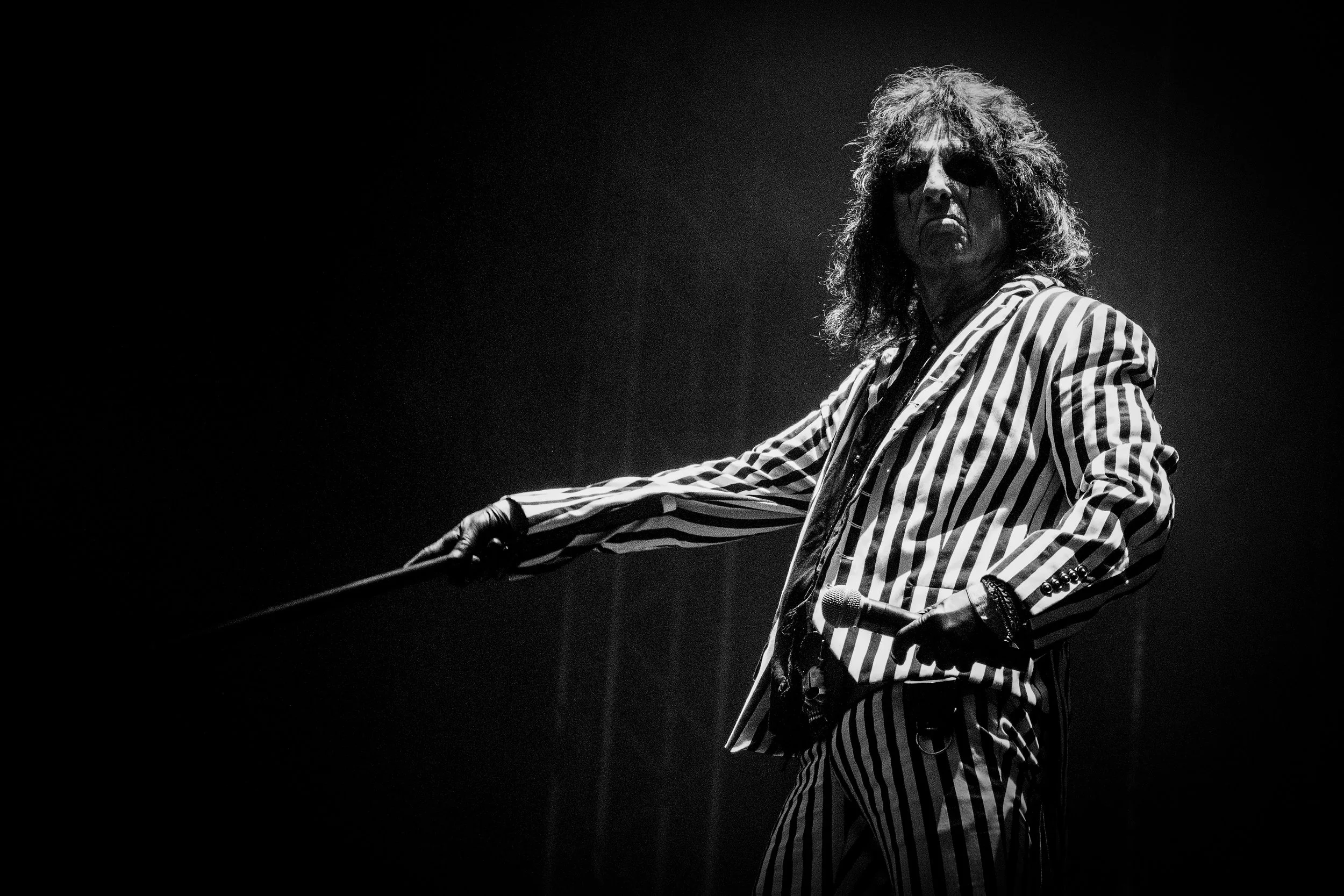
Alice Cooper @ Tons of Rock
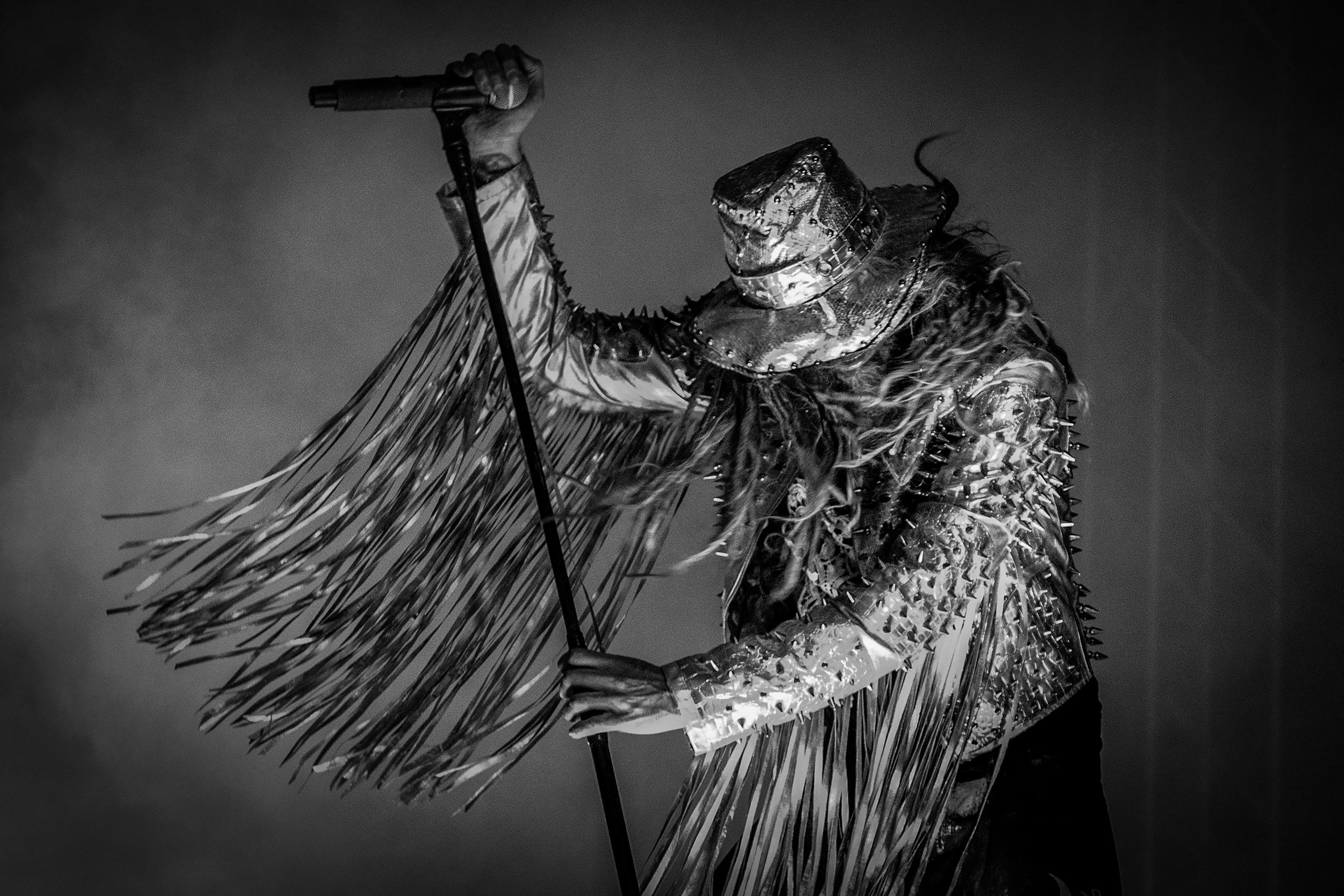
Rob Zombie @ Tons of Rock
I have also been lucky enough to capture some of my favourite bands including Amon Amarth, Lamb Of God, Trivium, Machine Head, Gojira, Witch Club Satan, Myrkur, Heilung, The Pretty Reckless, Brutus, and Cwfen.
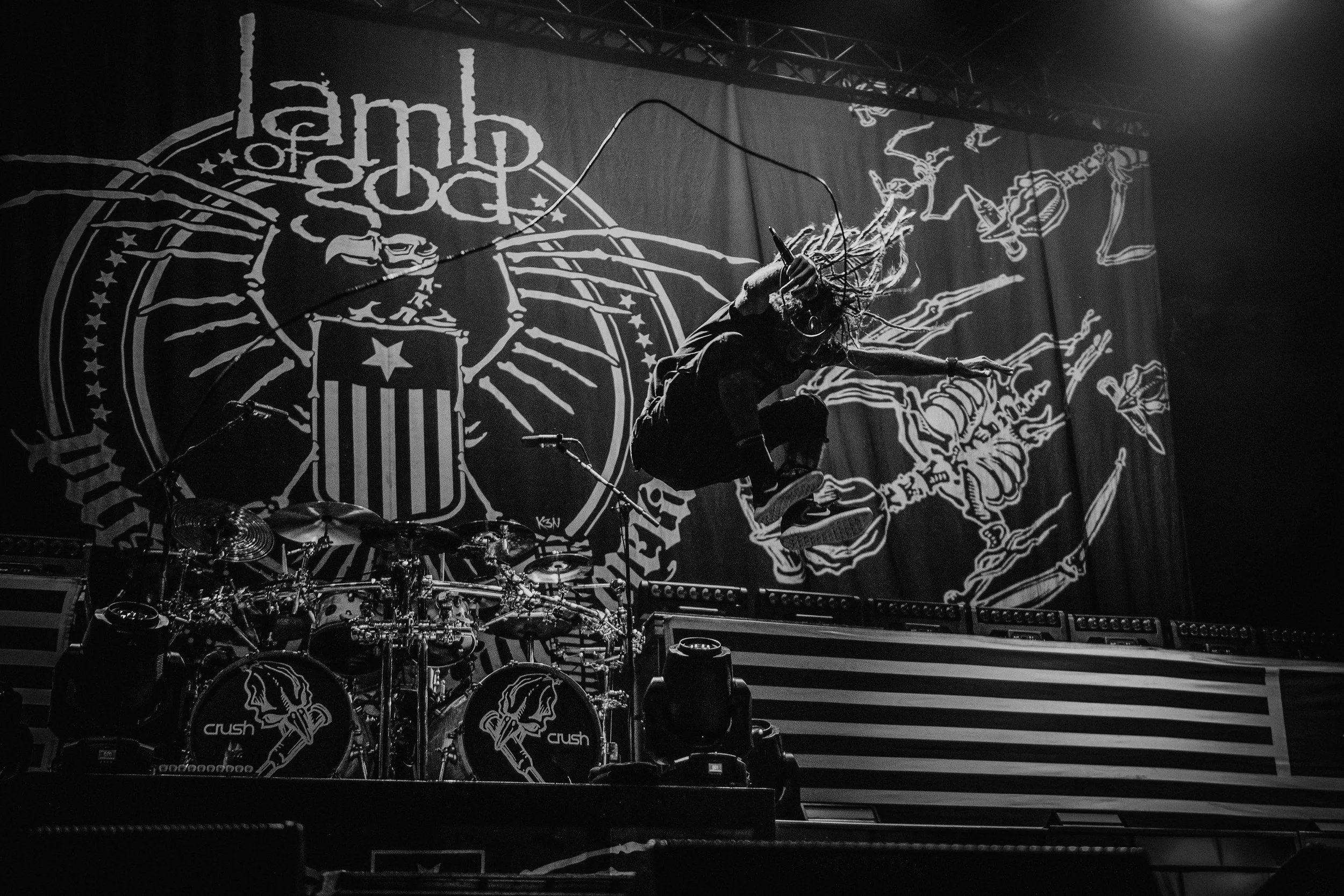
Lamb of God @ Wembley Arena
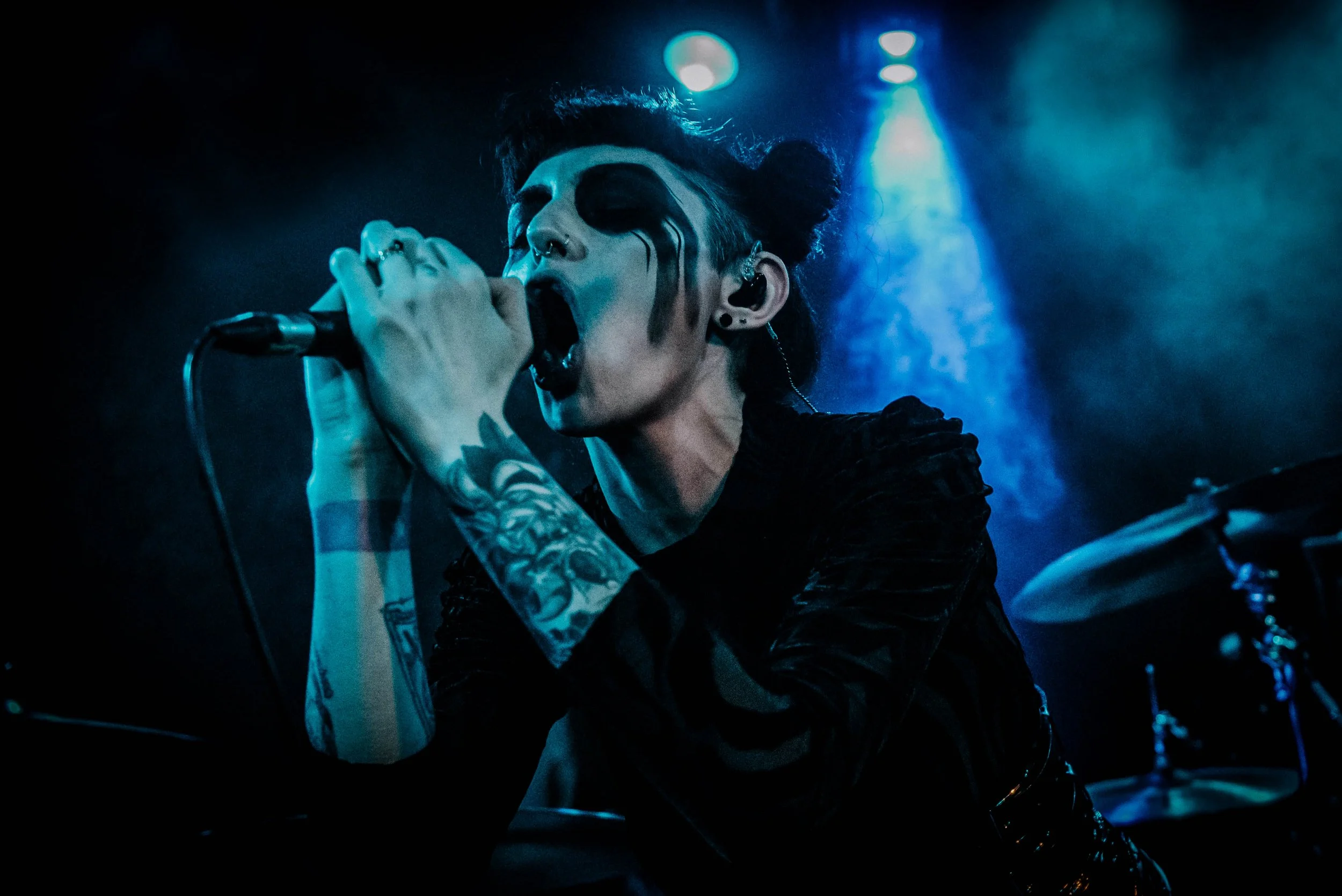
Cwfen @ The Black Heart
There are still a few bands on my Wishlist that I would love to shoot one day, including The Rolling Stones and Iron Maiden.
One of my most memorable shows to shoot was Amon Amarth at The Underworld in Camden in March 2016, which was an underplay around the release of their “Jomsviking” album and was such a treat to see a band I loved play such a tiny venue. It was the first time I had ever seen a photopit at that venue, but it was only about 30cm wide, so the photographers had to shimmy in and then shimmy out again, so we were stuck photographing from just one position rather being able to move around, but I feel so lucky to have been able to shoot that, especially only after a year of having a professional camera.
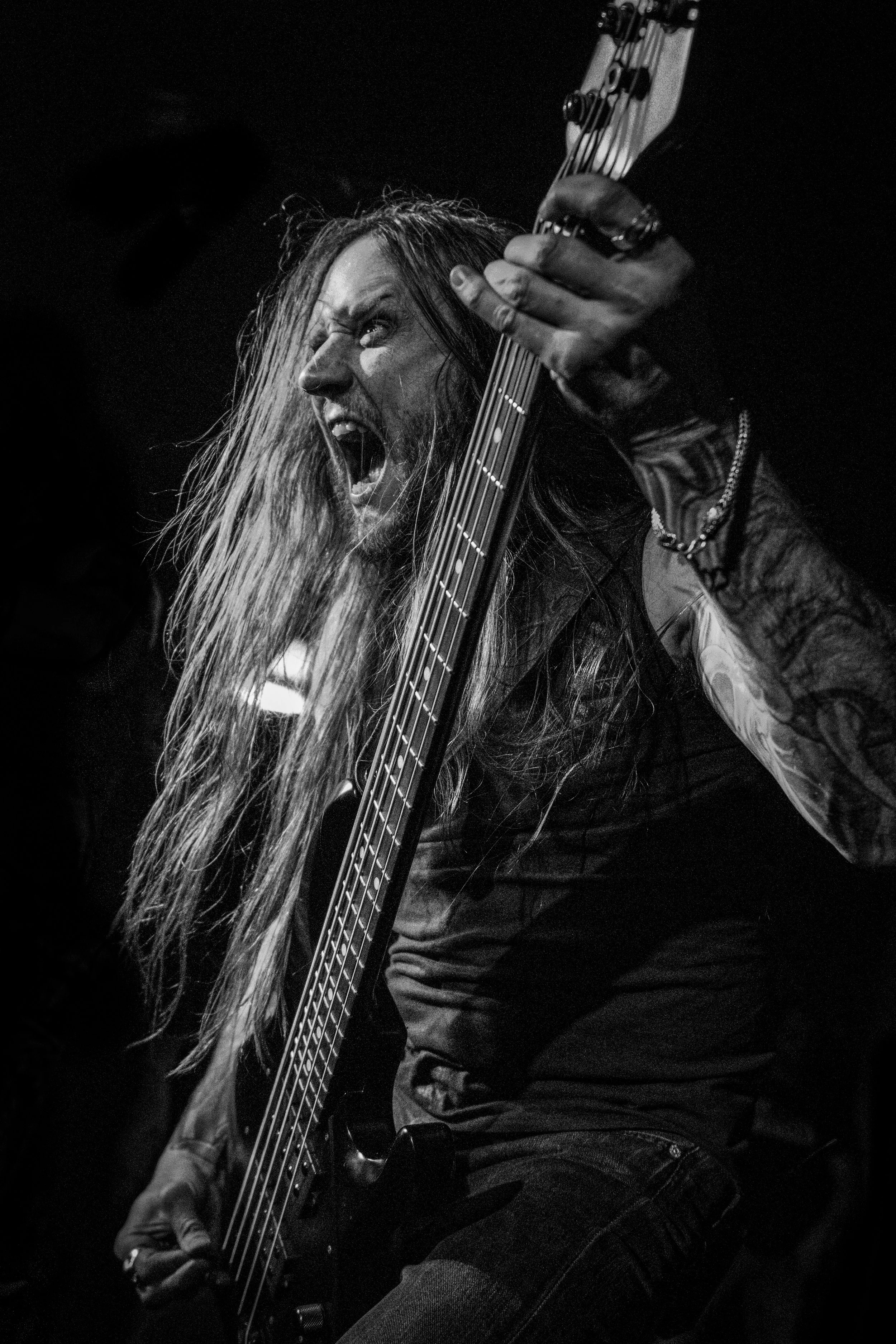
Amon Amarth @ The Underworld
Another set I was really happy to shoot was Parkway Drive at Tons of Rock Festival in Oslo in 2024. I am a big fan of the band and had shot them once before at Alexandra Palace, but wasn’t happy with the shots I had got previously as for me they didn’t capture the full energy and production. After the allotted 3 songs in the photopit, I braved the crowd and positioned myself in the perfect spot to capture some of the insane pyro. Shows like that tend to photograph better in the dark than in bright sunlight, but I am really happy with the shots that I got. A very similar experience happened when I photographed Machine Head on the same stage at the same festival last year in 2025 – I braved the crowds and got some wider shots that I think really capture the atmosphere.
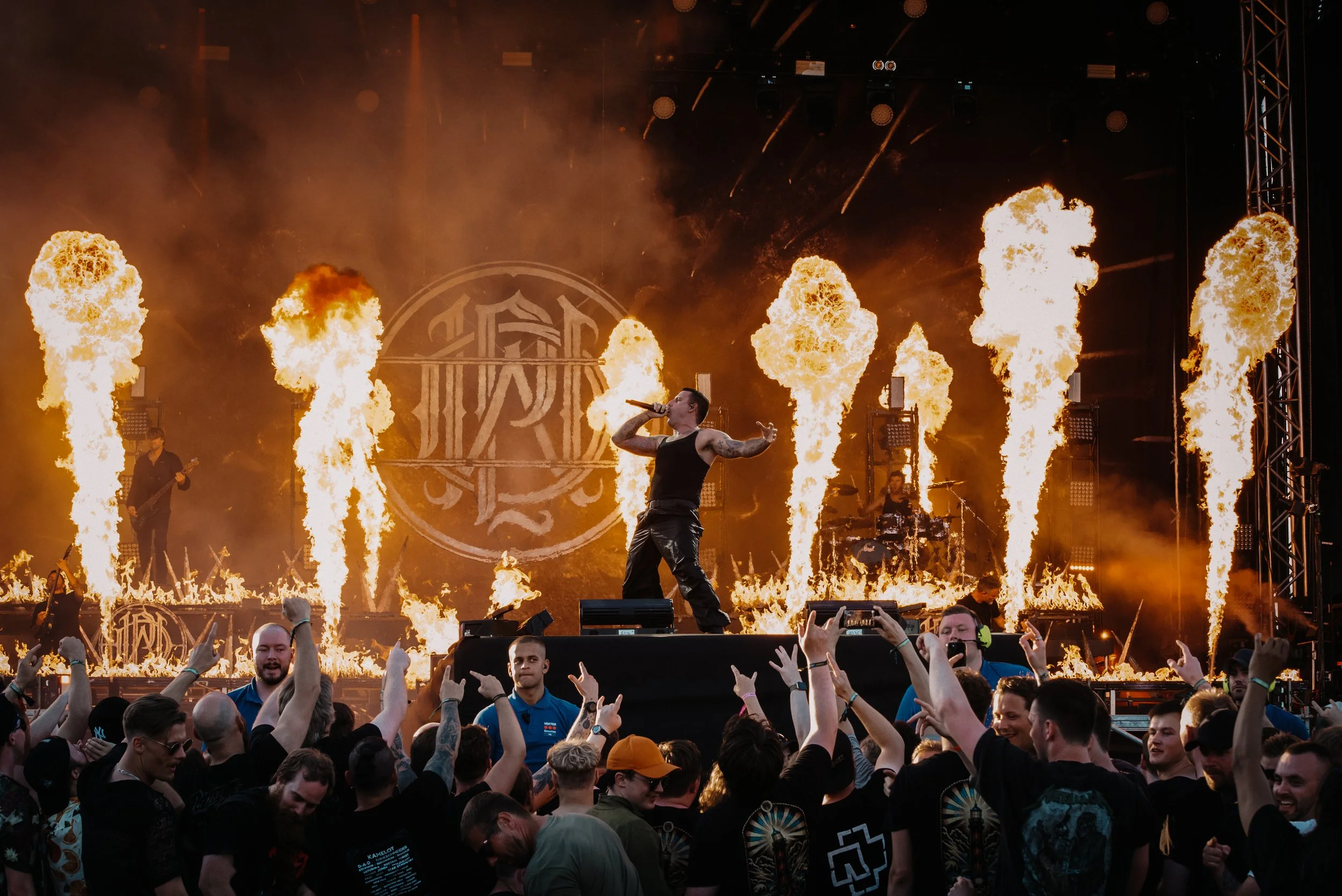
Parkway Drive @ Tons of Rock
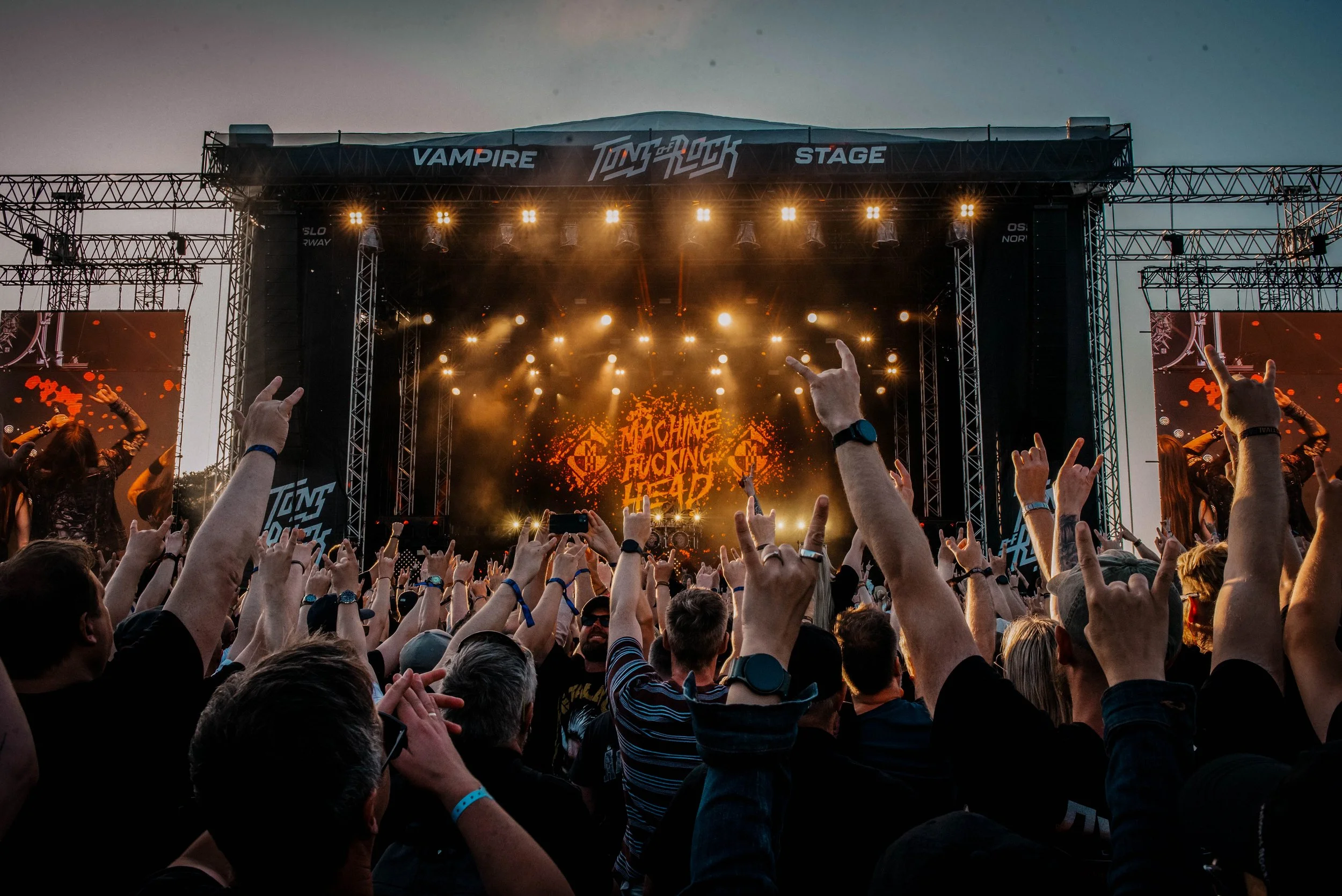
Machine Head @ Tons of Rock
7. Full transparency I know next to nothing about this, but I am positive there will be readers who want to know: for the “gearheads” out there, what does your kit look like?
I started off in 2015 with a Nikon 3200 and a kit lens, but my current gear list (which is all second-hand) I have had for 8 years and is still going strong! I have 2x Nikon D750 bodies, a Nikon 24-70mm f/2.8 lens (that I use most), a Nikon 70-200mm f/2.8 lens (mostly used for festivals), and a wide-angle Tokina 11-16mm f/2.8 lens (for shooting at smaller venues or when I want to try and capture all the band members on stage).
I use a Holdfast “Camera Swagg” double-camera harness, and my camera bag of choice is a Crumpler “Base Park” which I love as it holds two camera bodies, 2 lenses, a laptop, and other peripherals as well as being well-built and comfy to wear. I have had both of these for about 8 years as well, and they are still holding out.
8. What can you tell us about the Silent Venues project?
The idea for the “Silent Venues” project was initially inspired by #TheSurvivalTour bike ride which saw five music industry workers cycle from Newcastle to London in October 2020 to raise awareness of the plight of the 600,000+ workers in the UK events industry, and to raise money for the #WeMakeEvents campaign. As part of their tour they visited iconic venues and festival sites, taking a group photo outside each. I loved seeing some of my favourite venues again in their photos and wanted to do a similar project myself in order to raise further awareness and funds for #WeMakeEvents and also for Music Venue Trust’s #saveourvenues campaign.
In late October 2020 I started creating a map of all the London venues that I had either been to as a music fan or as a photographer. I came up with the idea of combining photographs I had taken at live shows at the venues with images of the now-dormant venues, plus exterior shots to create a juxtaposition between the energy of a live show and the current silent state of the venues. Usually when I photograph live music my focus is on the artist / band, but for this project I went through all the shots I had taken at these venues and selected images that showed the stage and crowd. Where access was possible, I tried to get similar shots of the interiors of the empty venues for a clear “before and after” effect.
For the purpose of the project I only included venues at which I have photographed live music shows. The majority of the venues were photographed on 31 March 2021 on a day-long circular walk encompassing 22 venues from The Garage to Nambucca. The other venues were photographed in clusters on other occasions. The interior shots of The O2 Arena were taken during a "backstage tour" event in August 2020.
Since undertaking the project, unfortunately at least two of the venues (Nambucca and The Unicorn) have now closed, and The Fiddlers Elbow is currently up for sale.
9. What can you tell us about the Women In Live Music collective?
Women in Live Music (WILM) is a European platform and online community for women working backstage in live music; sound engineers, tour managers, lighting designers, riggers, backliners, stage managers, stagehands, truck drivers and more.
They organise workshops and meet-ups throughout Europe at which members can interact with and learn from each-other, and their online Crewlist provides a tool for bands, booking agencies, and companies looking for female crew members, and aims to facilitate accessibility to qualified women working in the field.
It was through contacts at WILM that I was able to start my on-going personal photography project celebrating women behind the scenes in the live music industry.
The most memorable experience of this was in February 2020 when I was invited to Wembley Arena to photograph some of the load-in and stage-build for the Sabaton show and got to see how everything goes together behind the scenes as well as photographing six female members of their crew. You can read the article I wrote about this for The Moshville Times here.
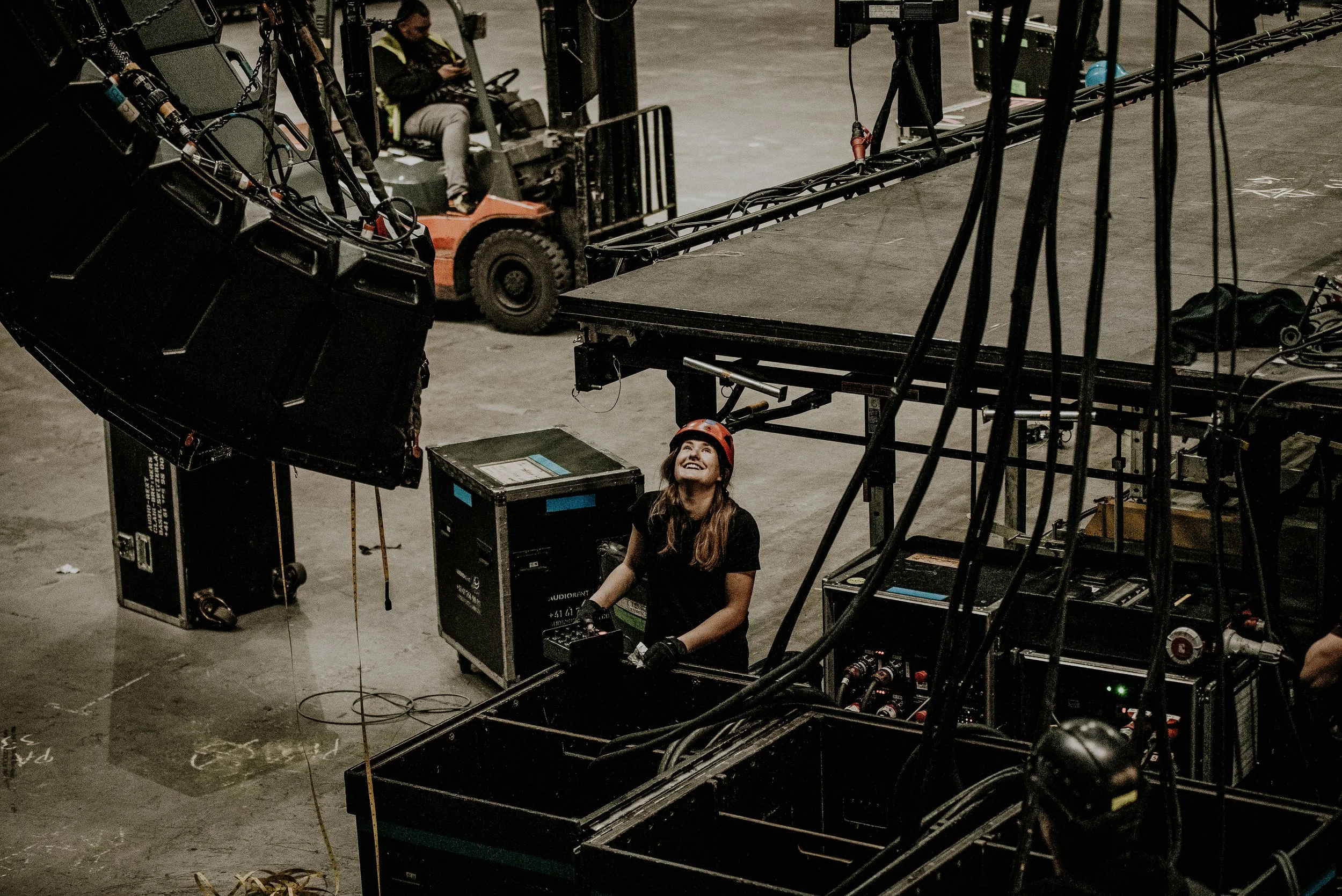
Megan Clement
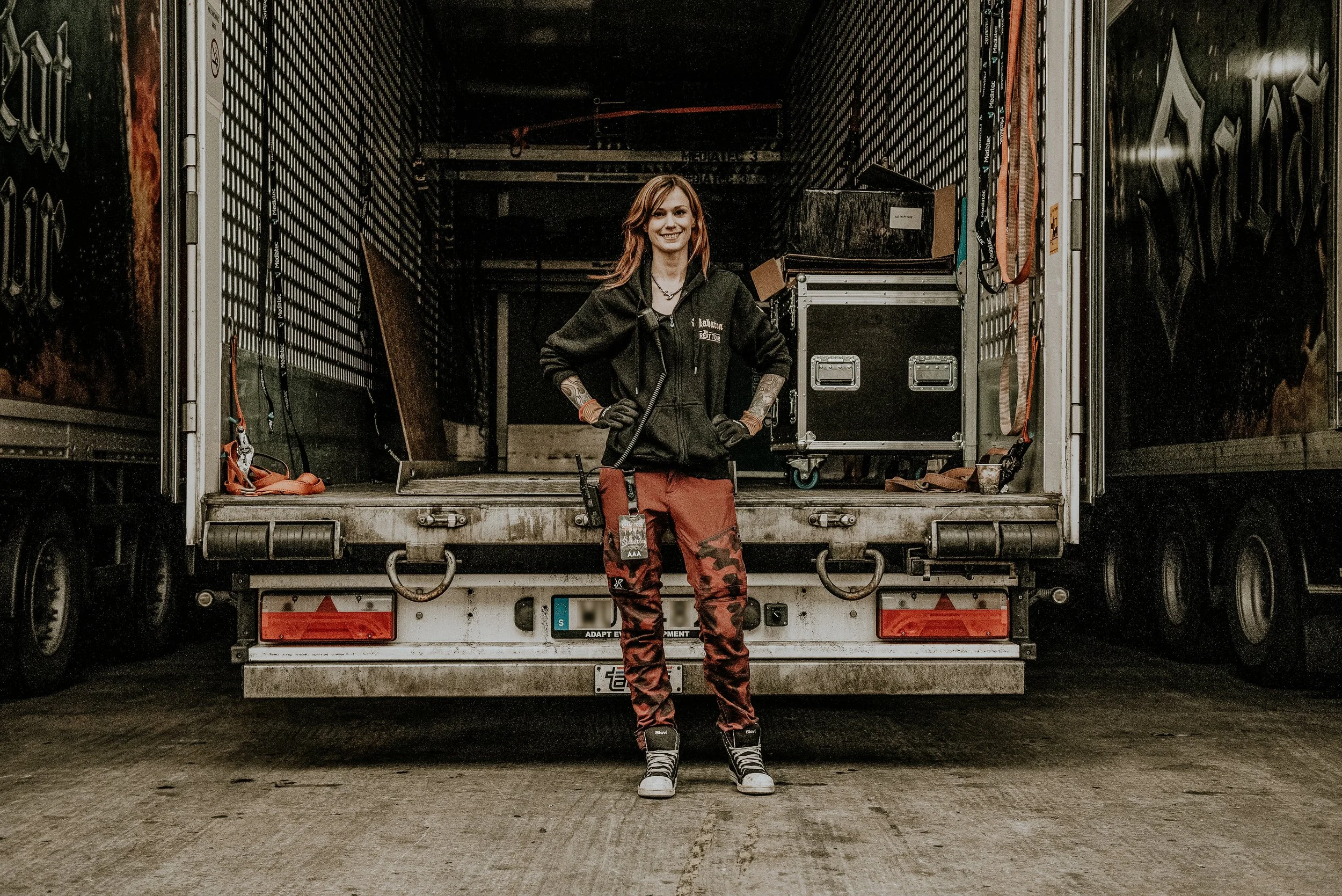
Jessica Bengs
10. Last question: You’ve been granted magical powers to bring five bands or artists past or present, living or deceased, together, at their peak, for a one-night show only. What’s the lineup?
Oh boy – where do I start! I sadly never got to see Motörhead so they would definitely be on my list, plus let’s go with Lamb Of God, Amon Amarth, Machine Head, and Trivium as they are some of my favourites.