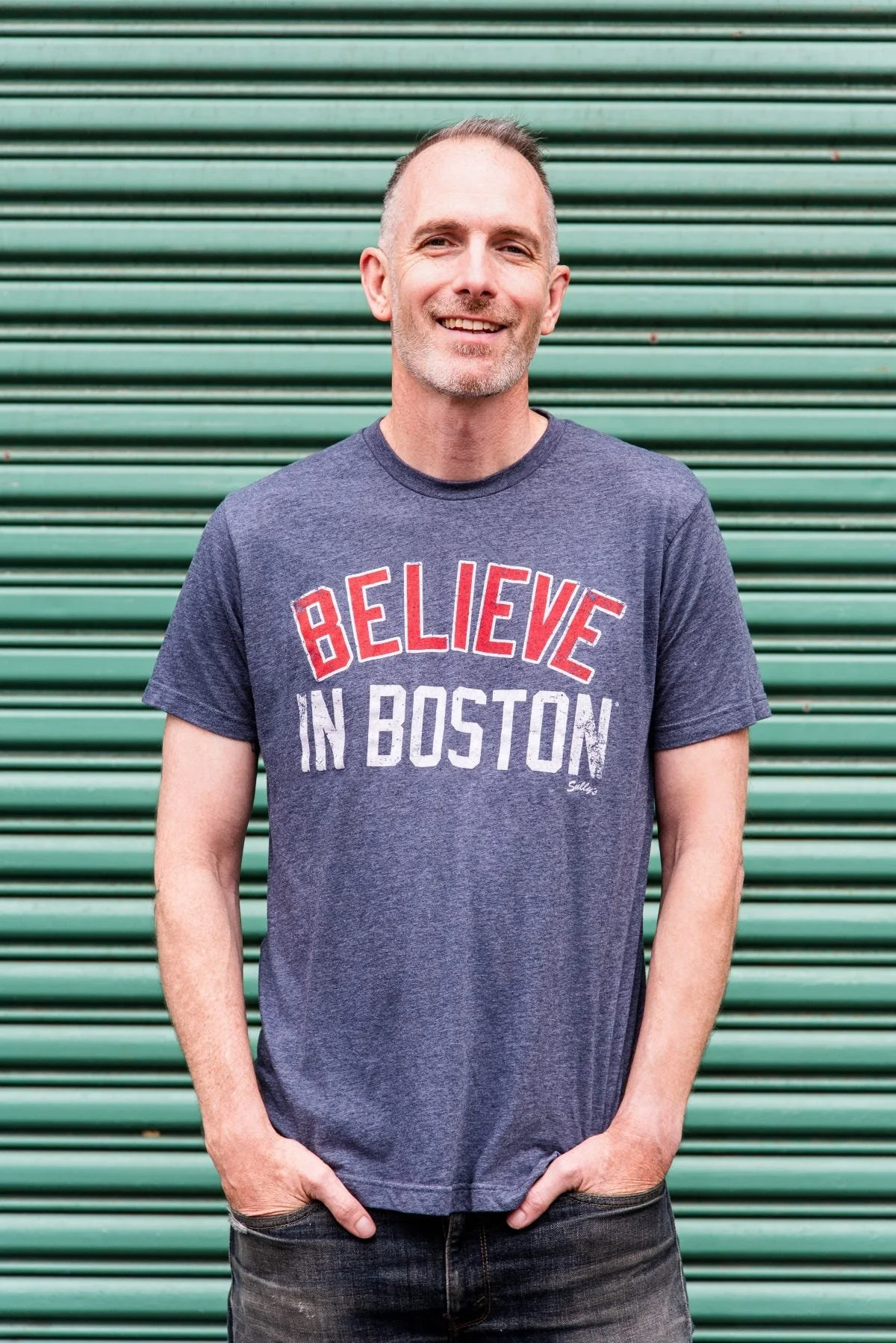
PHOTO CREDIT: CHRISTOPHER PADGETT
1. All the Cores and More is pleased (and honored) to welcome Chris Wrenn, founder of the legendary hardcore label Bridge Nine Records and Sully’s, the first stop for Boston sports and Boston pride apparel. Chris, I understand you were just at the Tied Down festival in Detroit. How was it?
Thank you for the opportunity, Jacob! It was great. Jimmy and Curtis run an incredible festival with Tied Down. I was stoked to see a lot of great bands over the weekend, but I was most excited to see Carry On play their first show in 21 years. They were one of Bridge Nine’s earliest artists. I released their album A Life Less Plagued in 2001. Their “last” show was in 2005, so it was great to hear those songs live again.
2. So we’re here to talk primarily about your new book Fenway Punk: How a Boston Indie Label Scored Big on Baseball’s Greatest Rivalry, published in February by Running Press/Hachette Book Group, though I do hope you’ll forgive me for a handful of other questions while I have you. The book is really an incredible story, and it captures a magical time both for Boston sports and for Boston—and New England more broadly—hardcore. First, would you please provide a quick overview of the book for folks who haven’t read it yet?
Absolutely! So, for a band like Carry On, their 2001 album was a very expensive project to take on. I flew the band from Los Angeles to Boston to record with Kurt Ballou at his Godcity recording studio. His bandmate in Converge, Jacob Bannon, was hired to design the album. All of the manufacturing and marketing expenses cost so much more than I could have afforded a year earlier. Fortunately, I had stumbled onto something that helped me pay for all of it. My friends and I had started selling “Yankees Suck” stickers and T-shirts to Red Sox fans, and it had become a very lucrative side hustle. That opportunity and all of the craziness that surrounded it became the basis of Fenway Punk.
3. When did you decide that the events described in the book should indeed become a book, and what did the writing and revision process look like? Funnily enough, Nancy Barile’s book I’m Not Holding Your Coat: My Bruises-and-All Memoir of Punk Rock Rebellion was actually next on my reading list, and lo and behold she is in the Acknowledgements! How instrumental was she in the writing process?
Nancy was incredibly helpful once the first draft of the manuscript was written. She was one of the earliest readers and gave me valuable feedback. She also introduced me to Raquel Pidel, who had edited her book, I’m Not Holding Your Coat. I hired Raquel to do a developmental edit. Every writer needs an editor, and she weighed in on what I should cut, where I could add detail, and how I could rearrange the chapters to help the story flow better. Once we both felt the manuscript was in a good place, she introduced me to my literary agent, Joseph Perry, who took the book on and landed the publishing deal. Nancy, Raquel, and Joe were all instrumental in helping make the book a reality.
I had wanted to write what became Fenway Punk for a long time; it was a super-formative era for both me and the label. I started typing out individual stories that would become the basis for the book over a decade ago, but only worked on it here and there for the first few years. I really dialed into it during the pandemic.
4. Considering your target audience is very important. One thing that struck me about Fenway Punk was that it was written in such a way that someone unfamiliar with either baseball or hardcore wouldn’t feel lost, and yet, as someone who followed the Red Sox closely during the time period described and as someone who’s been immersed in hardcore for decades, I didn’t feel at all like I was reading something “entry level.” How did you approach striking the delicate balance between writing for a more general audience and for more specific audience subsets?
It was difficult, but so important to how I wanted to tell the story. I’ve talked about how the Yankees and Red Sox rivalry benefited hardcore bands for years. Even back in 2002, in an interview that I did with Maximum RockNRoll. But sports fans having essentially funded an entire generation of hardcore bands was a story largely unknown outside of the punk scene. With Fenway Punk, I filled in a lot of the details that I’d held back on over the years, and I wanted to make sure it would be interesting and easy to follow for anyone. And that is regardless of whether they are sports or music fans. You don’t need to know anything about baseball or punk to follow along.
5. It strikes me that in a lot of ways, the author-publishing house relationship in its various dimensions, as well as the publishing industry more broadly, is remarkably similar to that of the band-record label-music industry. Have you found any parallels?
From my experience, it’s about what is made, how it is relevant, and who you connect with. And when someone is investing in your project, they need to know if you’re a good person who will work hard to push it. With Bridge Nine, almost all of my releases have been by people who are one degree of separation away from me. The first were by people I went to high school with or had met locally. Then, the people I met while I was on the road on tour. In the years since, it’s mostly artists who’ve been recommended by people I’ve worked with and respect. There are exceptions, I’ve also worked with bands that I met completely randomly—even a couple from unsolicited demos—but there was usually something that connected the dots. Bridge Nine is an independent record label. That means it has limited resources, and I need to make decisions on bands that I trust. That trust is more easily found in people I know, so having someone I respect vouch for a band carries a lot of weight. The publishing industry is similar. You need to start with something that is well written, sure, but you also need to deliver it at the right time and show that you are worthy of the trust and investment in your project.
6. Fenway Punk really is a perfect title for the book. Would you please explain how the Pedro Martinez-inspired headline dovetails perfectly with what you were doing outside Fenway Park—both literally and with the label?
For those who don’t know Pedro Martinez, he is one of the greatest pitchers in Red Sox history. In 2003, during a particularly spirited game between the Sox and Yankees, one of their coaches, Don Zimmer, ran out onto the field to confront Pedro. Pedro had thrown a ball at a Yankees batter’s head—an intimidation tactic he had been known for—and it made Don angry. He was an old timer who had played professionally in the years before wearing a batting helmet was mandatory and had suffered pretty terrible injuries because of it. At 72 years of age, he had no business running at Pedro, and he was tossed to the ground with little effort. A full-page photo where it looked like Pedro was manhandling Don ran on the cover of the New York Post with the headline “Fenway Punk,” even though Pedro was just defending himself. I thought it was the perfect title for the book because most of the vendors in our crew were active members of the Boston hardcore punk scene, and all of our hustle was happening on the sidewalks around Fenway Park.
7. There were so many references and connections to my own experiences contained in the book that I could easily write an essay about it, whether that be wheeling in the TV cart from the AV room after school to watch the Sox’s epic comeback against the Yankees while ostensibly studying to discovering Terror (among others) on the Spring 2003 Lumberjack Distribution Sampler to Club Lido and the Have Heart farewell tour (though, alas, not Have Heart’s final show at Club Lido—that would be popping my Lido cherry at Mischief Brew and Leftover Crack/Choking Victim something like twenty years ago in the former case and throwing down at Valentine’s in Albany a month prior to Edge Day 2009 on one of the farewell tour’s last stops in the latter case).
I grew up outside of Portland, Maine in the early- to mid-2000s before heading to Upstate New York for college, and I’d be remiss if I didn’t highlight the Maine connections in the book. One was the really interesting bit of lore where I learned that 3/5ths of the original American Nightmare lineup had recently relocated to Boston from Portland and that the band’s first-ever show was at the State Street Church in Portland. Local legends Outbreak and Cruel Hand also appear in the book. Obviously Cruel Hand would’ve been on your radar with the Outbreak personnel, but I’m curious as to what about these bands suggested they’d be great fits for Bridge Nine.
There was a lot of overlap between bands back then. Cruel Hand is a good example because two of the guys had been in Outbreak a few years earlier. My hometown friend Jesse “Standhard” Gustafson had been in Tenfold, B9’s first band that we worked with. When he started Right Brigade, I wanted to do something with him in that band too, because they were great. As I got to know the members, it made sense to work with other projects they would start.
The book isn’t really a history of Bridge Nine; it’s more of a snapshot during a particularly formative time. I’ve arguably done a lot more in the years since, but it was that original spark, that early hustle, that I wanted to document. What I was doing when the label was starting to gain traction is something that I think people trying to do their own thing can relate to more. It isn’t so much a “how-to” book. I tried to paint a vivid picture of where I was and what I had to do when I was getting started, and I hope it will inspire others to achieve their goals unconventionally.
8. What is some practical advice you have for folks looking to build their respective projects from the ground up in a DIY manner?
The best advice is to start as soon as you can. Plant a flag in the ground, doing whatever it is you want to do, and other people in your orbit will help. It’s all called DIY, but it should be called Do It Yourself At First. Get it started with whatever resources you have, and then build from there with help from your friends and community. You’d be surprised who will come out of the woodwork if what you are doing resonates. Then, look for people who have done something similar. Don’t be afraid to ask for advice from people already doing it at a higher level. If there’s an opportunity to work in a field doing what you want to do, get experience, and find mentors. You might have the spark, but you’ll need help once things get moving.
9. It feels like hardcore is in a better place currently than it’s been in for a long time. Do you feel like this is an accurate assessment?
I feel like hardcore is in an amazing place. The older, influential bands are still vital and killing it. If you told me in 2003 that a band like Gorilla Biscuits would have been touring pretty regularly for over twenty years by 2026, I wouldn’t have believed you. But they are, and they’re still great. I just saw Negative Approach again [at Tied Down], and they’re still inspiring new bands 45 years after their first show. In the last few years, bands from the 2000s have played some of their biggest shows ever. New bands are popping up and keeping things fresh and exciting, so if anything, there are more active bands in the genre than ever before. Bands that have crossed over and had mainstream success, like Turnstile and Knocked Loose, continue to be gateways for new hardcore punk fans who want to dig a little deeper, as had happened with Hatebreed and New Found Glory a generation before.
On the nuts-and-bolts side, you have people who started very grassroots in the scene, as I did with Bridge Nine, making things happen at a higher level than ever before. Labels can do more for their bands. Bands that don’t have labels have more tools to DIY than the generations that came before them.
10. You’ve been granted magical powers to bring five bands or artists, past or present, living or deceased, together, at their peak, for a one-night show only. What’s the lineup?
S.S. Decontrol (R.I.P. Al Barile!), Bad Brains, Misfits, Dead Kennedys, and Suicidal Tendencies would be a pretty sick show.
11. Thank you for this interview! Do you have any last words for the readers?
Thanks! Grab a copy of Fenway Punk wherever books are sold! The hustle outlined in it is now manifested in our store and HQ in Beverly, Massachusetts. Bridge Nine, and the brand that started in the streets around Fenway, Sully’s, share a retail space that anyone can visit. We have also been hosting some pretty cool shows in our warehouse, most recently with Outspoken and Bane, so keep an eye on what we are up to by being on our email list and keeping tabs on our Instagram page!