AN INTERVIEW WITH DOCTORS JAN HERBST AND MARK MYNETT OF THE HEAVINESS IN METAL MUSIC PRODUCTION PROJECT
3-24-26
1. Hello men, and thank you for taking the time to answer my questions! We’re here to talk about your now-concluded Heaviness in Metal Music Production (HiMMP) project and the accompanying publications, but before we get into the project itself, I’d like to ask about your respective backgrounds: I know you both have impressive resumés and it’s a lot to condense into one short answer, but would you please give readers a brief snapshot of your CVs?
Jan: I’m Professor of Music at the University of Huddersfield in England. My work sits between music production, popular music studies, and musicology. Before moving into academia, I spent a decade as a freelance musician and ran my own recording studio in Germany, so the production side of things is something I came to as a practitioner first. I’ve published around ten books (including the Cambridge Companion to Metal Music and a monograph on the history and sound of German metal) along with fifty-odd journal articles, and I’ve been fortunate to secure major funding from bodies like the Arts and Humanities Research Council, the German Research Foundation, the Leverhulme Trust, and Horizon Europe for projects at the intersection of music, technology, and culture.
Mark: I’ve been a musician, guitarist, since the age of twelve after my dad took me to my first gig and along the way worked with Colin Richardson [Bolt Thrower, Carcass, Napalm Death, Machine Head-Burn My Eyes, Fear Factory-Demanufacture] and Andy Sneap [Cradle of Filth, Megadeth, Killswitch Engage, Bullet for My Valentine, Earth Crisis-Breed the Killers]…and then moved into music production and I still record, mix, and master now. I do front-of-house work [for] a number of bands, Wytch Hazel being one—I’m doing Wacken with them this year. Divine Chaos is another, and I’ve done various other bands along the way…Also as you may know I am the author of Metal Music Manual as well as contributing to the HiMMP project.
2. How did the idea for the Heaviness in Metal Music Production project come about?
Jan: Mark and I had both been working on metal music production independently for some time before we ever collaborated. He came from a professional background as a metal guitarist with Kill II This, went on to build his own production company Mynotaur, completed a PhD on contemporary metal music production, and wrote Metal Music Manual for Routledge, which remains the go-to textbook in the area. My own route was through research into German metal (what I ended up calling “Teutonic metal”) and the sound and production aesthetics of electric guitar and rock music more broadly. At the time, there were very few people doing empirical work on metal production, so we were aware of each other’s work.
The idea of applying for a joint project emerged naturally from that overlap. We spent a good while searching for the right angle, and we settled on heaviness fairly quickly once we started talking. Heaviness is, by most accounts, the defining characteristic of metal from a sonic and production standpoint, yet it had rarely been studied systematically. That felt like an obvious gap, and one that would resonate with both the academic and practitioner communities.
What followed was over a year of refining the research design. Just as significant was the task of reaching out to internationally renowned producers and their management teams to check whether access to the field would be realistic. We then applied to the Arts and Humanities Research Council and waited for close to a year. Honestly, neither of us expected to be successful. Projects in this area hadn’t often attracted that level of national funding, so the odds felt slim. It was more of a passion project; small chance of success, but substantial reward if it came off.
When the award came through, we were genuinely surprised. That moment was significant not just for us personally but for the field as a whole because it demonstrated that research into a niche area like metal music production can secure national funding if the justification is strong and the methodology is rigorous enough.
Mark: The idea really was from Jan. He had the idea of focusing on heaviness as this concept that is widely referred-to but not fully understood, and certainly not fully understood from a record producer’s point of view, so that was really the foundation for the project.
3. Your research dives into the ongoing debate of “naturalistic” versus “hyperrealistic” in metal production, represented as a spectrum. Would you please define these two terms for readers and provide the broad strokes of said debate?
Jan: In short, these two terms describe the poles of a spectrum along which metal producers position themselves, though I should stress that it’s a continuum, not a binary.
On the naturalistic side, the aim is to capture a sound that still feels recognisably rooted in performance. Producers working in this mode value tradition, liveness, and what you might call the “human feel” of a recording. They tend to preserve the natural dynamics and imperfections of a performance, and they use the studio to enhance rather than replace what the musicians do. Mike Exeter, Andrew Scheps, and, to a considerable extent, Fredrik Nordström sit toward this end of the spectrum, though each in distinct ways.
At the other end sits the hyperrealistic approach, which uses technology to engineer a sound that exceeds what any live performance could deliver, a kind of “larger than life” sonic experience. Drum hits are tighter and more uniform than any human could consistently achieve; guitars are layered and processed to create a density that goes well beyond what you’d hear in a rehearsal room; every element is digitally edited and sculpted for maximum impact. Buster Odeholm is the clearest representative of this philosophy in our study, though producers like Adam “Nolly” Getgood and Josh Middleton also work toward the hyperreal end in different ways.
Mark: As far as the on-going debate between the naturalistic versus hyperrealistic productions, I think with hyperrealistic, the way that it’s often used is it’s like Disneyland: everything’s larger than life, everything’s made impossibly big. In other words, the guitars are very, very close, very proximate, the drums are larger than in reality—it’s basically larger than reality whereas a more natural perspective would be like you’d experience to a degree in a live situation, although live performances are getting increasingly more polished and more hyperreal as well. So more natural would suggest less modification of drum sounds, of guitar sounds, so they are as perceived naturally from the acoustic drum kit or an analog guitar amp.
Jan: The debate between these orientations runs deep in metal culture. There’s a longstanding tension in rock and metal about what counts as “authentic.” Some people equate it with tradition, natural sounds, and a connection to the “real,” which in metal tends to align with the naturalistic approach. Others locate it in boundary-pushing and technological ambition, in the drive to go further sonically than anyone has before. That second position maps onto the hyperreal. What makes metal interesting is that both positions carry genuine subcultural weight. Old-school fans and producers sometimes view hyperreal production as sterile or inauthentic, while younger listeners raised on contemporary extreme metal may hear naturalistic mixes as dated or lacking power. Neither position is inherently right; they reflect competing commitments within the genre’s culture. When we analysed over 600 YouTube comments on the producers’ mixes, we found exactly these divisions, and the tensions turned out to be remarkably productive. In a way, those disagreements are what keep the genre alive and evolving.
4. Not a question per se, but curious to get your thoughts on this. An important point you make in Chapter One of Heaviness in Metal Music Production: A Practical Guide deals with contextualizing heaviness: “Treat heaviness as a historically living target: what sounded extreme in 1970 will read differently to audiences raised on contemporary metal,” and you noted this with the comments as well. I had an interesting moment along these lines about a year ago when having a conversation with a musician who is a fair bit younger than I am regarding, believe it or not, a record produced by Fredrik Nordström in Bring Me the Horizon’s Suicide Season (2008). It was interesting to me that to this musician, I forget the exact verbiage he used, but essentially the record didn’t sound especially crisp, whereas to me, having “been there” (in the scene, not literally in the studio) and having listened to it extensively when it came out and plenty since, it remains to my ear fixed in context as sounding super crisp and polished, even in light of my ear’s “continued evolution,” if you will, with listening to records produced by individuals such as Buster Odeholm, “the clearest representative of the hyperreal philosophy in [y]our study.” I did find it additionally interesting that, as you note, Nordström does tend more toward the naturalistic approach, but “his innovations have paradoxically enabled some of the techniques now employed in hyperreal production approaches.” I feel like the late 2000s were the beginning of a pretty significant production shift.
Jan: That anecdote captures something central to our research. The perception of production quality, and heaviness itself, isn’t fixed; it shifts with every generation of listeners and every technological development. What sounded extreme or polished in one era can sound restrained or even rough to ears calibrated by a later standard. Your musician friend hearing Suicide Season as something less than crisp, while you still hear it as polished and present because you encountered it in its own moment, illustrates exactly the kind of generational listening shift we found across the board.
Fredrik Nordström is a particularly interesting case here. He was instrumental in shaping the Gothenburg sound, a production aesthetic that defined an entire era of melodic death metal through records with In Flames, At the Gates, Dark Tranquillity, and others. In his own creative orientation, he gravitates toward naturalness and organic textures. Yet some of the techniques he pioneered (the layering strategies, the approach to guitar tone and separation) indirectly enabled the very hyperreal methods used by the next generation. That paradox matters, and it comes up repeatedly in the data. Innovation in production doesn’t follow a simple linear trajectory from “old” to “new.” Producers build on what came before, but they also react against it, sometimes in ways that pull in different directions.
Buster Odeholm sits at the other end of the spectrum and represents the hyperreal philosophy in its most uncompromising form. His work with Humanity’s Last Breath and Vildhjarta prioritises surgical precision, extreme processing, and a level of sonic density that would have been much harder to achieve routinely two decades ago. For listeners raised on that standard, a late-2000s production like Suicide Season may well sound comparatively organic, even though in 2008 it represented the cutting edge of its particular subgenre context.
You’re right that the late 2000s marked a significant inflection point. The widespread adoption of digital audio workstations, high-quality amp modelling, and sample-based drum production around that period opened up possibilities that fundamentally altered what metal could sound like. Our research documents how producers on both sides of the naturalistic/hyperreal spectrum have responded to these tools. Some have embraced them fully; others deliberately resist them in pursuit of a sound that retains its organic character.
Mark: Heaviness really is a moving target…There are so many differences in what people perceive as heavy. Some people think it’s blast beats and very fast sub-divisions, a lot of other people feel that it’s slower sub-divisions. Then obviously people’s own perspective of the world and their hearing differs, so how they would respond to certain sounds or cymbals or low frequencies would differ individually, and also impacting everybody individually is their understanding, their experiences of live music, or is it more studio music, what is their earlier experience? So if somebody’s grown up on Bon Jovi and they hear Behemoth, it’s obviously something that’s going to be very heavy, whereas someone who listens to Behemoth and black metal continually, then they’ve got a different yardstick for what they consider heavy, so it really is a moving target.
5. The research team composed, recorded, mixed, and mastered a track called “In Solitude” and then took the track to eight producers—representing three generational perspectives, three different geographical production schools, and spanning the spectrum of production ideologies with naturalistic on one side and hyperrealistic on the other—to mix and produce their own versions of the song. I’m going to list out the research team and the producers with a brief snapshot of their work for context for the readers prior to your answer, but there are a few questions here: 1) what was your intent with structuring the research this way, ie-what insight into the debate would it provide? 2) what were the key takeaways? and 3) what defines heaviness and what were the producers in agreement upon?
HiMMP Project Researchers: Drs. Herbst and Mynett
HiMMP Artists: Aaron Stainthorpe, vocals (My Dying Bride)
Ralf Scheepers, vocals (Primal Fear)
Rich Shaw, guitar (Cradle of Filth)
Luke Appleton, bass (Blaze Bayley, Absolva)
Dan Mullins, drums (My Dying Bride, Malediction, Blasphemer)
Mark Deeks, orchestration (Winterfylleth)
HiMMP International Advisory Board: Prof. Michael Ahlers, Leuphana University (Lüneburg, Germany): Expert on empirical research methodologies and popular music
Dr. Niall Thomas, University of Winchester (UK): Expert on metal music production
Prof. Samantha Bennett, Australian National University (Canberra, Australia): Expert on music technology and production
Prof. Rupert Till, University of Huddersfield (UK): Expert on popular music and music production
Prof. Karl Spracklen, Leeds Beckett University (UK): Expert on metal music studies
Prof. Simon Zagorski-Thomas, University of West London (UK): Expert on music technology and production
HiMMP Producers: (quotes from Heaviness in Metal Music Production: A Practical Guide Chapter Two)
Jens Bogren: “One of metal’s most sought-after producers, with over 700 professional credits to his name. The founder of Sweden’s Fascination Street Studios, Bogren has shaped the sound of modern metal through his work with a wide range of bands, including Opeth, Arch Enemy, At the Gates, Dimmu Borgir, and Amon Amarth. His notable productions include Opeth’s Ghost Reveries (2005) and Watershed (2008), Amon Amarth’s Twilight of the Thunder God (2008), and Kreator’s Phantom Antichrist (2012).”
Mike Exeter: “After beginning his career as a rock producer with black metal band Cradle of Filth in the late 1990s, Exeter formed a long-lasting relationship with Tony Iommi and Black Sabbath and contributed to their Grammy-nominated album 13 (2013). His credits also include Heaven and Hell’s The Devil You Know (2009) as well as Judas Priest’s Redeemer of Souls (2014) and Firepower (2018).”
Adam “Nolly” Getgood: “Originally known as the bassist for progressive metal pioneers Periphery, Getgood co-produced several of their albums, including the Grammy-nominated Periphery III: Select Difficulty (2016). His production credits extend to influential progressive and technical metal acts, including Animals as Leaders’ The Joy of Motion (2014), Devin Townsend Project’s Transcendence (2016), and Architects’ Holy Hell (2018).”
Josh Middleton: “Best known as the founding guitarist/vocalist of British thrash metal band Sylosis and former lead guitarist for Architects, Middleton’s production credits include Sylosis’ Cycle of Suffering (2020) and A Sign of Things to Come (2023), as well as co-production on Architects’ Holy Hell (2018) and For Those That Wish to Exist (2021).”
Fredrik Nordström: “Fredrik Nordström is one of the most influential figures in the development of Scandinavian metal production. As the founder of Studio Fredman in Gothenburg, Nordström played a pivotal role in shaping the ‘Gothenburg Sound’ that defined Swedish melodic death metal. His production credits include genre-defining works with In Flames, At the Gates, Dark Tranquility, and Arch Enemy, as well as significant releases from bands like HammerFall, Dimmu Borgir, and Opeth’s acclaimed Blackwater Park (2001).”
Buster Odeholm: “[Odeholm] has quickly established himself as a leading figure in extreme metal production through his work with his own bands (Humanity’s Last Breath and Vildhjarta) and productions for artists like Born of Osiris, Oceano, and Darkane.”
Dave Otero: “A specialist in technical death metal and doom metal production through his work at Flatline Audio in Denver. His credits include every Cattle Decapitation release since 2012 and all of Khemmis’s albums, as well as acclaimed technical death metal productions for Allegaeon and Archspire, whose albums Relentless Mutation (2017) and Bleed the Future (2021) have earned him widespread recognition.”
Andrew Scheps: “Grammy-winning engineer who has worked across both pop and rock, as well as metal. His metal credits include engineering Black Sabbath’s 13 (2013) and Metallica’s Death Magnetic (2008), both produced by Rick Rubin. Beyond metal, his extensive client list includes Adele, Red Hot Chili Peppers, and Michael Jackson.”
1) Why structure the research this way?
Jan: The core idea was pretty straightforward. Take one song, give it to eight different producers to mix, and then compare what they do with identical source material. By holding composition, arrangement, and performance constant, we could hear what was down to production rather than songwriting or performance.
We composed and recorded “In Solitude” ourselves specifically for the project. The musicians were all accomplished metal professionals: Aaron Stainthorpe and Ralf Scheepers on vocals, Rich Shaw on guitar, Luke Appleton on bass, Dan Mullins on drums, and Mark Deeks on orchestration. The song was deliberately written to span multiple metal styles (doom, symphonic, thrash, and modern extreme) so that each section would invite different production responses. We also provided optional elements like drum samples, alternate bass layers, and different guitar tones. That mattered because it gave the producers genuine creative latitude while still maintaining the controlled comparison.
The eight producers were selected to represent three generational perspectives, three geographical production schools (British, Swedish, and American), and a spread across the naturalistic/hyperreal spectrum. Mike Exeter, Andrew Scheps, and Fredrik Nordström represented an earlier generation across the UK, US, and Sweden, respectively. Jens Bogren and Dave Otero came from the next generation. And the contemporary cohort (Adam “Nolly” Getgood, Josh Middleton, and Buster Odeholm) brought the most recent production philosophies to the table. What proved especially important was that we gave none of them a reference mix. Each producer’s version represents their uninfluenced vision for how the song should sound, which is what made the comparison so revealing.
We also put together an international advisory board covering empirical research methods, music production studies, popular music, and metal scholarship to ensure the project was methodologically grounded from different disciplinary angles.
Mark: It really was this idea of trying to get the producers to respond to those different performance characteristics that I’ve just referenced—the blast-beats, the tremolo picking, the very fast sub-divisions with the cymbals and the double-kick, ensemble rhythmic synchronization—and then the slower sections that have got space for reverb, additional space for the low frequencies to decay, and what we were hoping was this would really provide an idea about how the producers would respond to those different forms of heaviness.
2) Key takeaways
Mark: We didn’t experience the producers responding to these different sections in a bespoke manner they just sort of dealt with it more broadly, and there was obviously some automation involved, but they more or less looked at trying to find settings that worked across these sections.
Jan: The biggest surprise was how different the eight mixes were from one another. Most people wouldn’t expect that from a genre often dismissed as sonically uniform. Production decisions in metal aren’t standardised formulas; they reflect the producer’s identity, their subgenre affiliations, and where they sit on the naturalistic/hyperreal spectrum. Each mix was immediately recognisable as belonging to a different sonic world, even though the underlying song was identical.
We also identified what we call the “meta-instrument” concept, which refers to the way leading metal producers treat the kick drum, bass guitar, and rhythm guitars not as separate elements but as a single unified sonic force. Getting these three components to interlock is, in many ways, the central engineering challenge of metal production, and it’s where the most significant differences between producers emerged.
But the one thing everyone agreed on was balance. A mix can be dark or bright, natural or hyperreal, compressed or dynamic, and find its defenders. But if the spectral balance is off, it gets called out immediately. That pattern was consistent across our own analysis and the audience data. Spectral balance, spatial design, and dynamic control emerged as the three primary axes along which metal production is evaluated, by practitioners and listeners alike. These categories weren’t imposed by us; they came through independently in both the producers’ interviews and the audience commentary.
3) What defines heaviness, and where did the producers agree?
Jan: Heaviness is arguably the defining aesthetic goal of metal, but it resists precise definition, and that is actually one of our key findings. All eight producers agreed that heaviness is absolutely essential to what they do, yet none could pin it down in a single sentence. Josh Middleton put it memorably when he compared it to “different ways of being killed in a horror film.” The effect is unmistakable, but the means of achieving it vary enormously.
Mark: The producers were very much in agreement that it’s a lot about brightness, it’s a lot about density, it’s a lot about making it three-dimensional, but apart from that, there were a lot of differences in the perspectives of the approaches to heaviness.
Jan: What we can say is that heaviness works on several levels at once. There are measurable sonic properties: low-end frequency content, distortion, dynamic range. But there’s also a subjective dimension because it depends on the listener’s familiarity with the genre and their emotional and bodily response. And then there’s what we call the relational dimension, which is about contrasts within the music itself. A heavy riff hits differently after a quiet passage; a dense wall of guitars gains impact from the interplay with other instruments.
Where the producers found common ground was on a few foundational elements. Distortion is unanimously central; no producer questioned its importance, though they applied it in very different ways and to different frequency ranges. Low-end frequency management is shared ground, as is rhythmic precision. We sometimes describe this consensus as the “slow, low, and dense” formula. Heaviness tends to result from slower tempos, lower frequencies, and denser sonic textures. But that formula is a starting point, not a destination, and heaviness isn’t reducible to tempo alone. What each producer does with those raw ingredients is where the real creative divergence happens.
6. One of the educational values my university emphasizes is having instructors who are if not practitioners themselves able to discuss practical applications of theory and in many instances, assignments will be simulations of real-world exercises. How do you see your research here contributing to real-world application(s) of the theoretical? How do you feel your respective experiences informed the creation and structure of the project?
Jan: The connection between theory and practice was built into the project from the outset. It wasn’t something we had to retrofit. Mark and I are both practitioners. He spent years as a professional metal guitarist, ran his own production company, and wrote Metal Music Manual, which is used as a teaching resource in music production programmes. I came from a background as a working musician and studio owner before moving fully into academia. That shared practical experience shaped every aspect of how we designed the research, from the composition and recording of “In Solitude” to the way we conducted interviews with the producers. We could speak their language, and that mattered enormously for the depth of the conversations.
When we designed the outputs, we wanted to make sure they’d be useful not just for academics but also for producers and students. Volume I of the monograph (How and Why It Works) provides the analytical framework, grounded throughout in concrete production examples with audio references. Volume II (Learn from the Masters) presents eight extended chapters, one per producer, that walk through their mixing decisions in granular detail, accompanied by the actual audio of their work. The interactive findings guide on our website synthesises the core discoveries with embedded audio examples so that readers can hear the differences we’re describing.
And the entire dataset is open access, which I think is where the real educational value lies. The multitracks of “In Solitude,” all eight producer mixes, the screen-captured mixing sessions, and the full video interviews are freely available for anyone to download and study. For educators, that’s a ready-made teaching resource. Students can load the same stems into their DAW, compare their approach to what eight world-class producers did, and understand why different decisions produce different results. The methodology itself (comparing professional treatments of identical source material) is a pedagogical model that can be replicated at any institution.
I should add that our practitioner backgrounds were also essential for access. These producers are busy professionals with significant reputations, and I don’t think they’d have agreed to participate if they hadn’t trusted that we understood what they do and would represent it faithfully.
Mark: [To the first question,] I think from people listening and responding to the interviews, they’ll experience the different approaches of the producers that myself and Jan dealt with. What’s interesting is when people watch “Mix with the Masters” or what have you, they will see different producers mixing different multitracks whereas the project of Jan and myself allows them to see here’s the same drums or bass or guitar sounds and we can look at how producers responded to the exact same source content. [To the second question,] only that I was fortunate enough to have worked with a lot of the musicians that performed the actual track, so Richard Shaw plays in a project called Plague of Angels that I’m involved in…I’d worked with [My Dying Bride before,] I produced their last two albums…Luke I’d worked with in previous projects, et cetera.
7. Generally speaking, do you feel like heavy music is generally not treated with enough seriousness within scholarly circles or regarded as worthy of serious study in the same way as, say, classical music or even jazz?
Mark: It’s changed a lot since the 80s and 90s, it really has. It was regularly regarded as…mmm, just not taken seriously. For some people, it was due to that it didn’t have a political message with the lyrics, and that’s changed quite a lot. So although I would say that it’s still not treated with the same seriousness within scholarly circles as perhaps classical or jazz, I do believe it’s changing.
Jan: That question comes up regularly, and my honest answer is that it depends on the period and the standard of scholarship you’re looking at. Historically, metal wasn’t taken as seriously as it deserved, but some of that was understandable. Early work in the field was uneven, as often happens when a new area of study emerges. Karl Spracklen and I addressed this in an editorial we co-authored for Metal Music Studies journal, where we traced the field’s development from the foundational works of Deena Weinstein and Robert Walser in the early 1990s through to the establishment of the International Society for Metal Music Studies in 2008 and the launch of the journal.
What’s changed over the past decade or so is a growing insistence, from within the field, on methodological rigour and analytical depth. The field has been described as entering its “teenage years,” with growing calls for a more reflexive approach that distinguishes genuine scholarship from fan or journalistic writing. The editorial team of Metal Music Studies itself published a piece on “how to be rejected” that made the standards clear: you need clear methods, clear concepts, and an argument that goes beyond fandom. You need to do more than describe metal; you need to explain why it is the way it is.
When Karl and I examined the articles published in the journal, a few patterns stood out. Extreme metal subgenres dominated the research, while areas like production, technology, and industry received far less attention. Comparison with other genres was almost entirely absent. That pattern suggested a field still turned somewhat inward. And from a HiMMP perspective, it confirmed that production was an underexplored area.
I’d say that metal studies isn’t fundamentally different from popular music studies more broadly. For those who can look past longstanding cultural prejudices about high and low art, metal scholarship receives institutional acknowledgement when it merits it on the quality of the work. The AHRC funding HiMMP demonstrates the point. Here was a project on metal music production, reviewed through the standard peer-review process, assessed alongside applications from every other arts and humanities discipline, and awarded funding on merit. The niche topic was never the barrier; the barrier, if there was one, was always the rigour of the research design.
8. What’s the reception to Heaviness in Metal Music Production been?
Mark: It’s been very strong. When we eventually released all the interviews, it had a really strong reception with people highlighting how it was different from the “Mix with the Masters” or those educational platforms.
Jan: The academic response and the public response have moved at very different speeds.
Academically, we’re still in the early stages. Academic publishing is slow by nature, and the core project-focused publications (the two volumes of the monograph and several companion articles) have only recently come out. The earlier publications from the project, such as our work on variance and commonality in metal mixing or the systematic framework for understanding heaviness, laid important groundwork but weren’t based directly on the original empirical study with the eight producers. So in many ways, we expect the most significant academic impact to be ahead of us rather than behind. That said, there have been invitations to speak at conferences and departmental research seminars, and when we presented the findings at the conference of the International Society for Metal Music Studies, the response was striking. People could immediately hear and see what we were talking about, and it opened up genuinely new ground for many in the room.
Outside of academia, the reception has been more immediate and, honestly, beyond what we anticipated. Our YouTube channel has accumulated over 200,000 views within its first year, which is substantial for an academic research project. The comments section became a research site in its own right. We collected and analysed over 600 comments for our Aesthetic Tensions article in Popular Music and Society, to examine how audiences evaluate metal production aesthetics. The level of technical literacy in those comments was remarkable. Viewers were discussing transient punch, panning, master bus processing, and the merits of different multiband compression strategies. That told us we’d reached an audience that genuinely cared about these questions.
Beyond our own channel, external YouTubers independently created videos analysing the mixes, including a popular Korean-language channel, which showed that the open-access materials were reaching audiences across linguistic communities we hadn’t directly targeted. Musicians and engineers sent us their own mixes of “In Solitude,” informed by what they’d learned from the producers’ approaches. And we were featured in Sound on Sound magazine, whose YouTube channel hosted our mix comparison video, which became a further catalyst for public discussion.
The reception data itself became a research output, which I didn’t expect. The audience commentary was rich enough to sustain a full peer-reviewed article, and that kind of genuine exchange between academic and practitioner communities is rare for any research project.
9. This is question for Mark: I saw you performed at the York Minster—how did that come about and what was the reception to that? I will always have a soft spot for York as I studied abroad there in 2009.
It was an incredible reception. It was particularly challenging overcoming the acoustical properties of York Minster; it’s got a twenty second reverb, so if we hadn’t really engaged with trying to cut down the reflections in the room there would have been like four or five different performances going on. Interesting to see you studied there in 2009, Jacob, I would imagine you had a great time in York, it’s a beautiful city. But in answer to your question, yeah, it was a really, really great reception.
10. Okay, a fun one here to close us out: You’ve been granted magical powers to bring five bands or artists past or present, living or deceased, together, at their peak, for a one-night-only show. What’s the lineup?
Mark: Do you know what, it would still be the original Black Sabbath lineup from their early albums, sort of, you know, classic 1972, 1974 around that time period, where Ozzy’s voice was still incredible. I’m sure you know the urban myth…I don’t know if it’s an urban myth or if there’s truth in there but apparently they were all doing so many, shall we say, um, “recreational substances” that they would forget songs they wrote, so their manager used to take them to local studios after they’d sound-checked in a given city. Legend has it that all of these recordings sound exactly the same as their albums because you take Black Sabbath into a room and put up microphones, that’s how they sound. And I love that idea—that’s very, very different than modern music production—that documenting performance event as with Black Sabbath. So that would be my answer.
Jan: Given my own background in the Swedish melodic death metal and progressive scenes, I’d go with the following.
1. At the Gates (Slaughter of the Soul era). The record that, alongside Nordström’s production, defined the Gothenburg sound.
2. In Flames (Clayman/Colony era). Peak melodic death metal, again shaped by Fredrik Nordström at Studio Fredman.
3. Opeth (Blackwater Park/Still Life era). The most ambitious fusion of progressive rock and death metal, produced by both Nordström and, later, Jens Bogren.
4. Dark Tranquillity (Damage Done/Character era). The other Gothenburg co-founders, often overshadowed but consistently excellent.
5. Pain of Salvation (The Perfect Element/Remedy Lane era). Progressive metal at its most emotionally raw and compositionally adventurous.
That’s a very Swedish answer, I know. But three of those bands were produced by Fredrik Nordström and one by Jens Bogren, both of whom were among our eight HiMMP producers, so the dream gig doubles as a live illustration of the sonic worlds we spent four years studying.
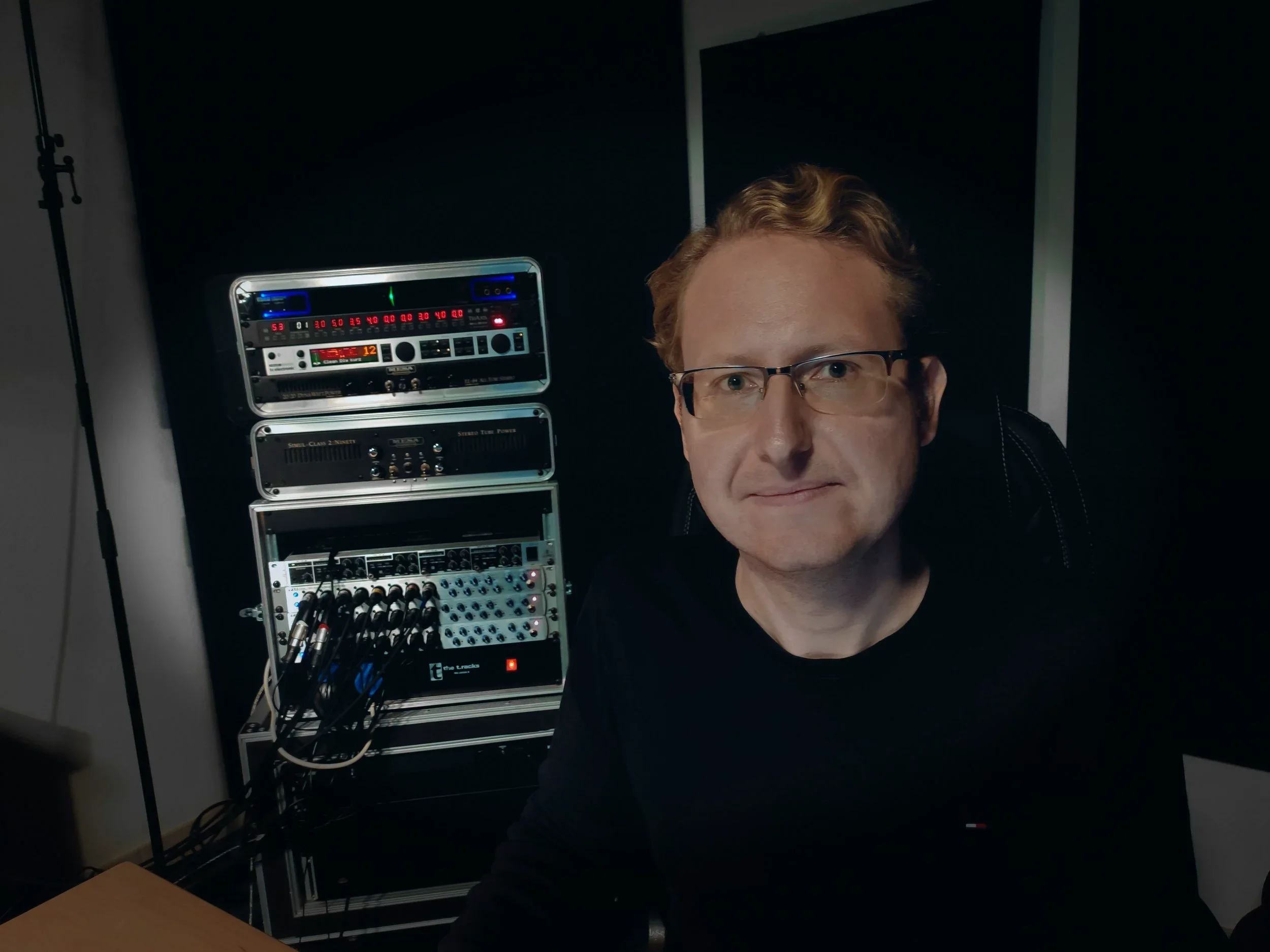
DR. JAN HERBST
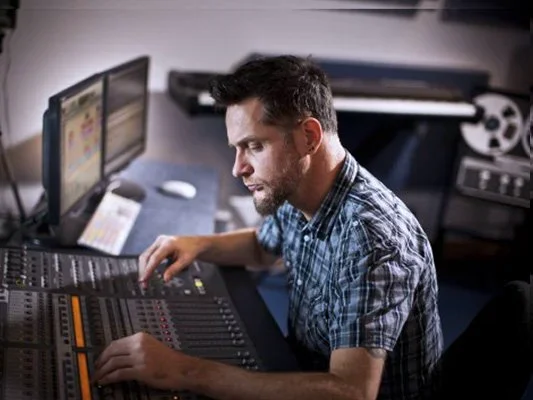
DR. MARK MYNETT